 KidNestClub
Kids Activities & Outdoor Play
Kids Outdoor Play Area Layout | 7 Zones for a Small Backyard
A small backyard works better as seven small areas than one big lawn: a dirt digging spot, a water table, a building mat, a climbing corner, a quiet seat, a loop for wheels, and one grown-up chair placed so every other area stays in view. This guide walks through what each area needs and where it goes, so the yard you already have plays bigger than it is. Ages 3-8, one weekend of rearranging, no shopping trip.
By KidNestClub · Updated 17 November 2026
Seven areas · Ages 3-8 · One weekend of rearranging · What you already own.
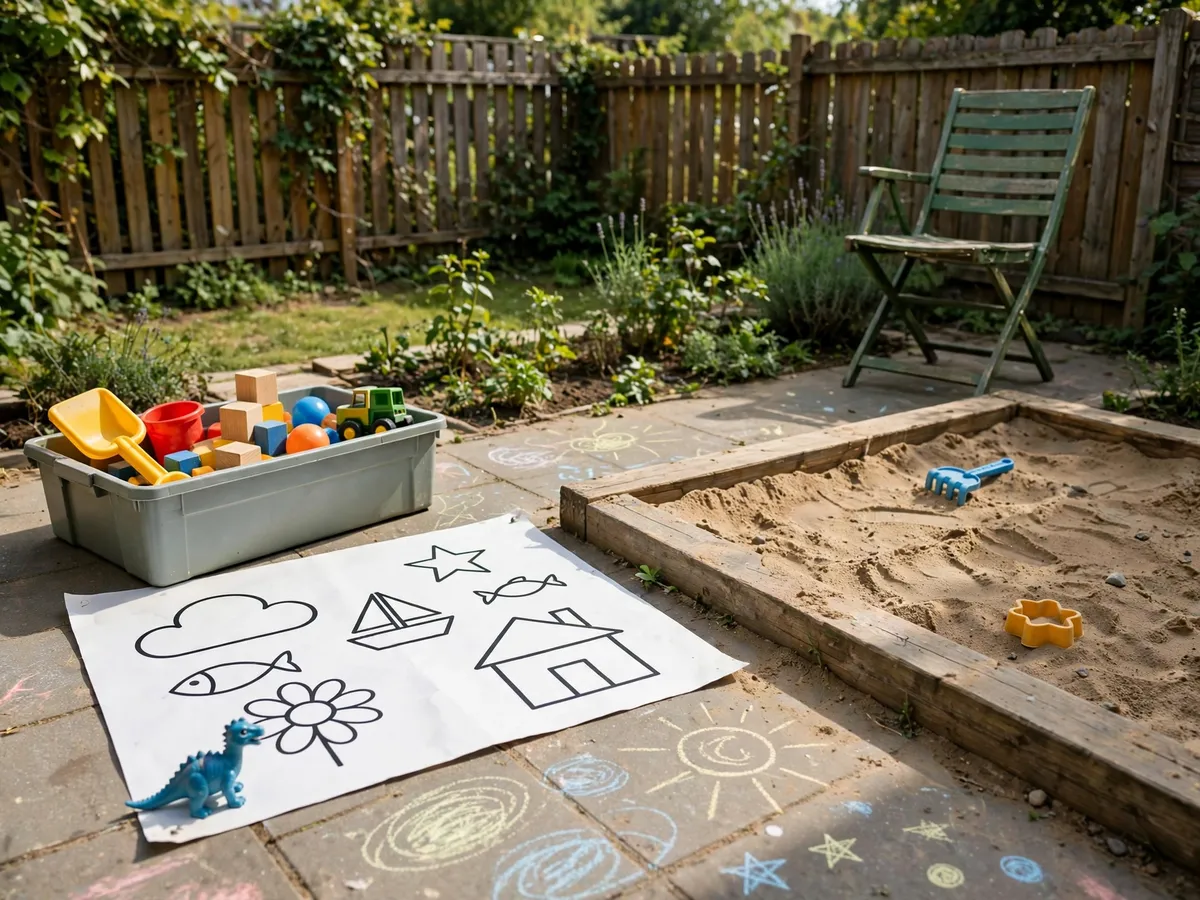
Start with the chair, not the toys
The first thing to place is the seat you will sit in, because every other placement follows from it. Pick the spot with the widest view of the yard — usually a patio corner or the back step — and treat everything you can see from that chair as the supervised half of the yard. The digging spot, the water table and the climbing corner all belong in that visible half. The quiet seat can sit slightly off to the side, in view but out of the flight path of balls and bikes. If the yard has a blind corner behind a shed or a hedge, that is where the storage goes, not the play.
Ages 3-8 · One grown-up seat · Play happens where the chair can see.
1. The dirt digging spot
Give up a corner of actual earth — a metre of flowerbed, a buried tub of soil, even a planter box — and stock it with two buckets, a child spade and a steady supply of "treasure" to bury. It goes near the fence on the digging-est side, away from the back door, because the traffic to and from it is muddy by design. The surface question answers itself: dirt wants dirt around it, so do not place it beside the patio you just swept. Ages 3-8 all share this one, and it is the calmest of the seven: an adult in the chair, close enough to act, is enough.
Ages 3-8 · A metre of earth · Near the fence, away from the door.
2. The water table
The water table goes on the flattest, most visible patch you have, close enough to the back door that refilling is a thirty-second job, and never beside the climbing corner — wet hands and ladders do not mix. Water play is touch supervision territory: stay within arm’s reach of your child near water, that close, all the time, and tip the table out at the end of the session rather than leaving it standing. Place it on grass or a drainable patch, not on a slippery patio.
Ages 3-8 · Flat and visible · Within arm’s reach near water, always; emptied after play.
3. The building mat
A flat, hard-ish surface — a paver square, a section of patio, a plywood offcut on grass — gives blocks and loose parts a stable floor, and a defined edge tells everyone where the build lives so it survives a night outdoors under a crate. Place it where the chair sees it directly, because building is absorbing and a busy builder forgets the yard exists. Keep it out of the bike loop’s path: a tower and a trike cannot share ground. A wash tub or lidded crate beside the mat is the storage, and the crate lid doubles as a table.
Ages 3-8 · One flat patch · Out of the wheel path, crate for storage.
4. The climbing corner
Whatever your climbing thing is — a small frame, a ladder against a stable wall, a group of stumps — it goes in the most visible corner of the visible half, on the softest ground the yard offers, with open space on every side so a wobble has room to resolve. Keep it away from the fence line, the clothesline and the water table, and give it its own patch rather than letting it share ground with anything on wheels. Climbing is with-an-adult play: an adult, close enough to act, stays in the yard while the frame is in use, and the manufacturer’s own setup guidance travels with the piece of equipment, whatever it is.
Ages 3-8 · Most visible corner, softest ground · An adult, close enough to act, in the yard.
5. The quiet seat
One small bench, a stump, a pair of cushions on a low wall — somewhere a child can sit with a book or a basket of figures and watch the yard go by. It goes off to the side of the action, in shade if the yard has any, close enough to stay in view from the chair but out of every flight path. A basket beside it holds the quiet-day things: books, figure sets, crayons in a bag clipped to the bench.
Ages 3-8 · Shaded and off to the side · One basket of quiet things.
6. The bike loop
Wheels need a path, not a destination: mark a loop — around the digging spot, past the patio edge, along the fence and back — and keep that whole circuit free of the other areas. Paint or chalk the route so it stays visible, and treat the loop as a one-way road for the sake of the smallest riders. The surface matters more here than anywhere else: the smoothest, driest paving you have wins, and the loop never crosses the water table or the building mat. Store the wheels at the loop’s start point so parking is part of the game.
Ages 3-8 · One marked loop · Smooth surface, one-way, never across the other areas.
7. Storage that ends the day
The seventh area is the one that closes the other six: a lidded crate per area, or one big deck box on the patio, so the ten-minute tidy is a walk, not a hunt. Put each area’s storage beside that area — the bucket with the dig spot, the crate with the building mat, the wheel park at the loop — because a box a child has to cross the yard to reach never gets used. The blind corner behind the shed, useless for sightlines, is the one place a big deck box earns its footprint.
Ages 3-8 · A crate per area · Storage lives where the toys land.
Safety, every yard day
For anything with a hazard in it — water, climbing, sun — the same rule applies: an adult, close enough to act. Water play stays within arm’s reach the whole time and the table empties at the end; climbing runs with an adult in the yard; and on sun days the water table and quiet seat move into whatever shade the yard has, with hats on before the door opens.
Save this for the next yard weekend
Pin the layout, then come back the weekend the hose comes out — the Kids Activities & Play collection holds the backyard play and ultimate outdoor play guides that fill the seven areas with things to do.