 KidNestClub
Kids Activities & Screen-Free Play
Indoor Games for Kindergarten: 8 Rounds That Fit a Small Room, Ages 5-6
Eight indoor rounds for ages 5-6, each sized for a single room and written around the moment it goes sideways — the round with no ending, the rule invented mid-turn, the run-up that turns into a sprint. Every round uses what is in the house already.
By KidNestClub · Updated 12 November 2026
Total scope: 10-20 minutes a round · Ages 5-6 · two to four players · cushions, rolled socks, tape and a laundry basket · nothing here needs a new box.
When nobody wants to stop at the end of a round
The round has no ending they can picture
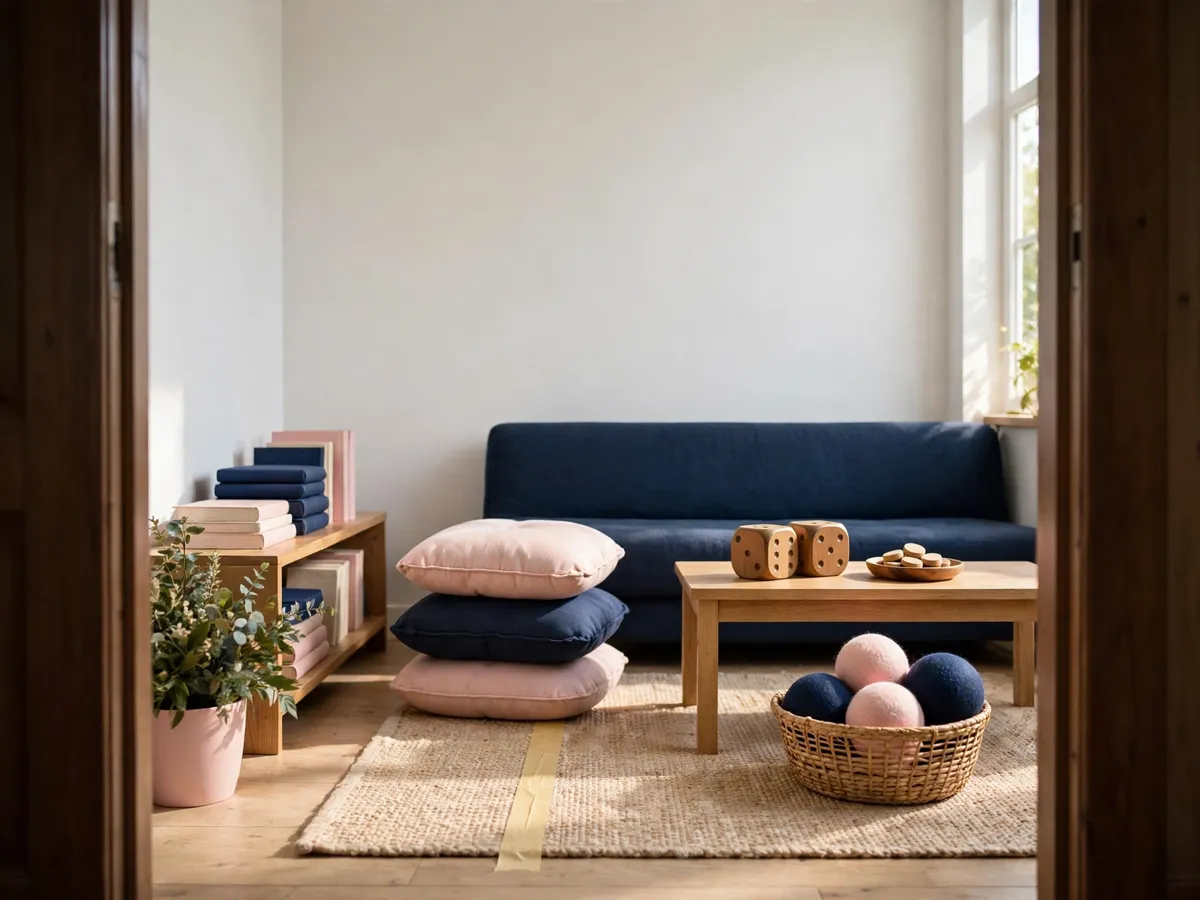
The first round is the island hop: three cushions on the rug, the floor is water, and the sofa-to-door trip is one crossing. A five-year-old cannot picture the end of a game with no finish line, so the stop belongs in the rules.
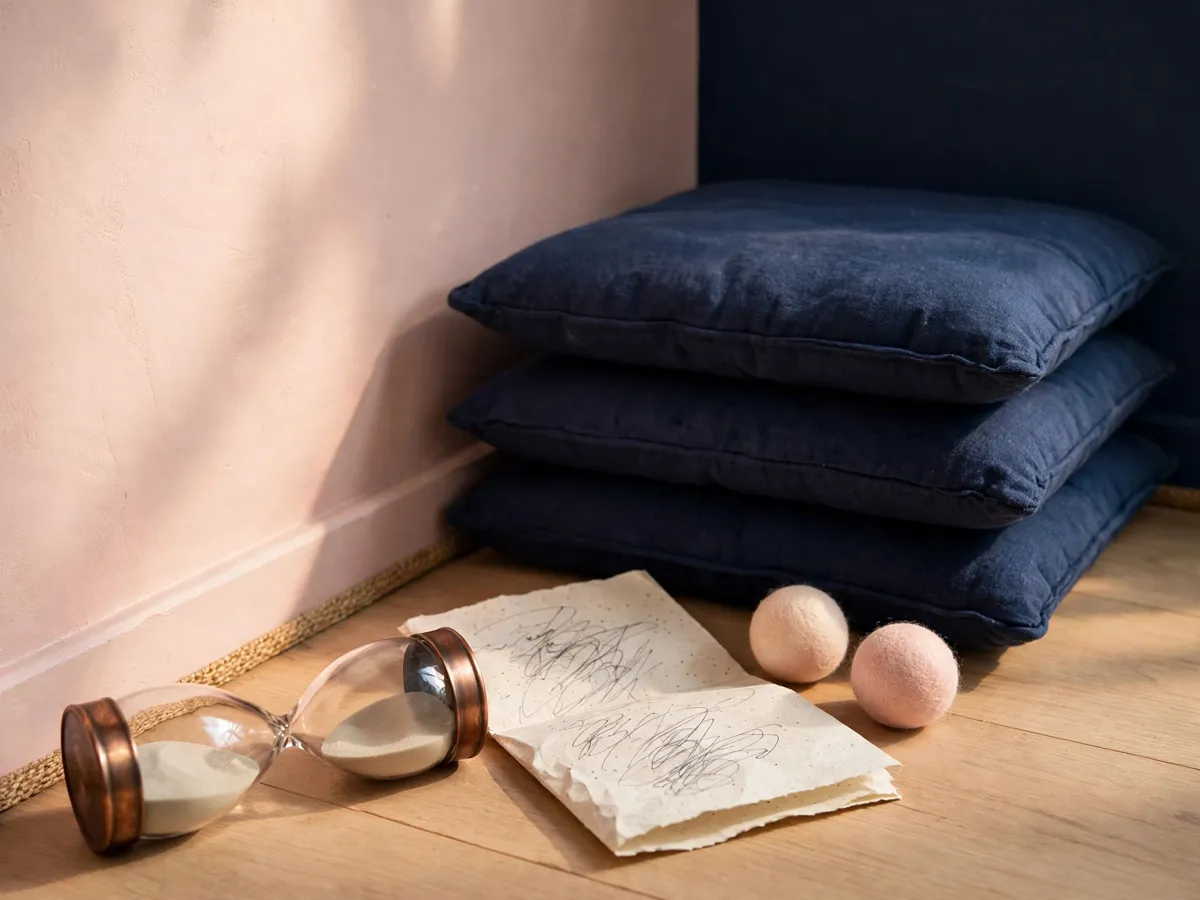
- Say the number of crossings out loud first: five there and back, then the cushions go under the sofa.
- Make the last crossing the shortest move, so the round finishes on the easiest step.
- Put the cushions away while they still want another crossing, and leave the rest for tomorrow.
When the rules change with every turn
Nobody agreed what counts as a fair turn
The second round is the doorway ferry: a soft toy travels from the bedroom door to the front door without touching the floor, one leg per player. The round stops working when each player invents the rule as they go — the newest rule always belongs to whoever is losing.
- Write three rules on a scrap of paper and tape it to the wall: no throwing, no floor, one leg each.
- Read them out loud at the start of every round, even the fourth one tonight.
- Let your child add one new rule at the start of a round, never mid-round.
When someone quits before the round is over
One score, one loser, and a reason to walk off
The third round is sock toss: rolled socks into a laundry basket, three throws each. Head to head it leaves one loser with nothing to do, so play it against the basket and the reason to leave the room goes with the score.
- Count the whole household's landed throws as one score, so there is no separate loser.
- Give everyone a second turn before the first score is read, so the round never closes on one bad throw.
- If someone walks off, keep the round going for the others and leave the door open.
When the round is over in two minutes
The whole game was a single move
The fourth round is the slow crossing: everyone moves wall to wall as slowly as they can without stopping, and the round lasts as long as the slowest crossing. That is the swap for a round that ends on the first move — same rules, one layer added.
- Add a count to the same move: how many crossings fit before the oven timer goes off.
- Add a carrying layer: a cushion balanced on one palm that has to stay flat.
- Add a return trip, so every player crosses twice before anyone sits down.
When the room gets too loud for the flat below
The round pays out in noise
The fifth round is the whisper round: one player names something in the room without saying which, and everyone guesses with a hand up rather than a shout. Same players, same walls, a different level on the dial — and a guessing round can run long after the shouting ones stop.
- Put the volume in the rules: every guess arrives with a hand up, not a shout.
- Keep the loud rounds for the first half hour after school, the quiet ones for after dinner.
- Move the shouting rounds to the room furthest from a shared wall, or outside.
When the round turns into running on a hard floor
The game asks for speed, and the room is all floor
The sixth round is hallway bowling: paper cups stacked at one end, a rolled sock to bowl with, and a run-up that grows with every turn. Take the run-up out of the rules and the room stays a room — the sock does not need speed to reach the cups.
- Bowl from a standing start, both feet behind a tape line on the floor.
- Keep socks on for the whole round, and clear the floor between turns.
- Set the cups close enough that the sock reaches them without a run-up.
Ages 5-6, and this is the round to stay in the room for. Running on a hard floor is the part of an indoor game that needs you there: for anything with a hazard in it, the same rule applies — an adult, close enough to act.
When a sibling joins and the round stops working
The round was set up for one pair of hands
The seventh round is the hide-and-say: one player hides the toy, one counts to twenty, one stands in the doorway and says warmer or colder. Every player already has a job, so an extra person at the door needs a job rather than a turn.
- Name the third job out loud before the round starts: door keeper, counter, or the one saying warmer and colder.
- Swap jobs at the halfway point, so nobody is stuck counting every time.
- Let the youngest player choose the hiding place, and keep every other rule where it was.
When it is the same round every single day
The round ran past its welcome
The eighth round is the copycat crossing: one player crosses the room any way they like, and the next player repeats it exactly. A favourite played every night turns into a chore by Thursday, so the eight rounds here take turns rather than run in a row.
- Keep three rounds in play for a week; put the other five out of sight.
- Change one rule rather than the whole round: same cushions, but the return trip runs backwards.
- Rotate the props as well as the game, the way a toy rotation checklist moves a box out of sight.
When the props need to change too, the toy rotation checklist covers how to move a box out of sight and bring it back later.
What fits a small room, and what does not
Three things decide whether a round survives one room: the width you can cross without moving furniture, the floor underfoot, and how many bodies are in it. Cushions, rolled socks, paper cups, a laundry basket and a roll of tape cover all eight rounds. Anything that needs a bounce, a swing or a two-metre run belongs outside.
For afternoons when the room has run out of ideas, the indoor activity setups list nine starting points by stuck moment, and the rainy day rescue menu is built for a whole wet afternoon. If the complaint is boredom with the toys rather than the games, the answers to “there is nothing to do” take another angle.
Save the round that matches your room
Pin the round you will actually play, then come back on the afternoon the room feels too small — the Kids Activities collection holds the screen-free swaps and toddler-safe pages that sit alongside this one.