 KidNestClub
Kids Activities & Play
Backyard Nature Hunt for Kids | No Equipment, Ages 2-6
A nature hunt needs a bag and five things to find, nothing else. This one is a slow circuit of the yard you already have: one checklist, one paper bag each, and a magnifying round at the end with any cup or jar that magnifies. Ages 2-6, twenty to thirty minutes, and the whole hunt happens within sight of the door.
By KidNestClub · Updated 17 November 2026
Total scope: 5 finds · Ages 2-6 · 20 to 30 minutes · one paper bag each, no equipment to buy.
1. Say the five finds out loud
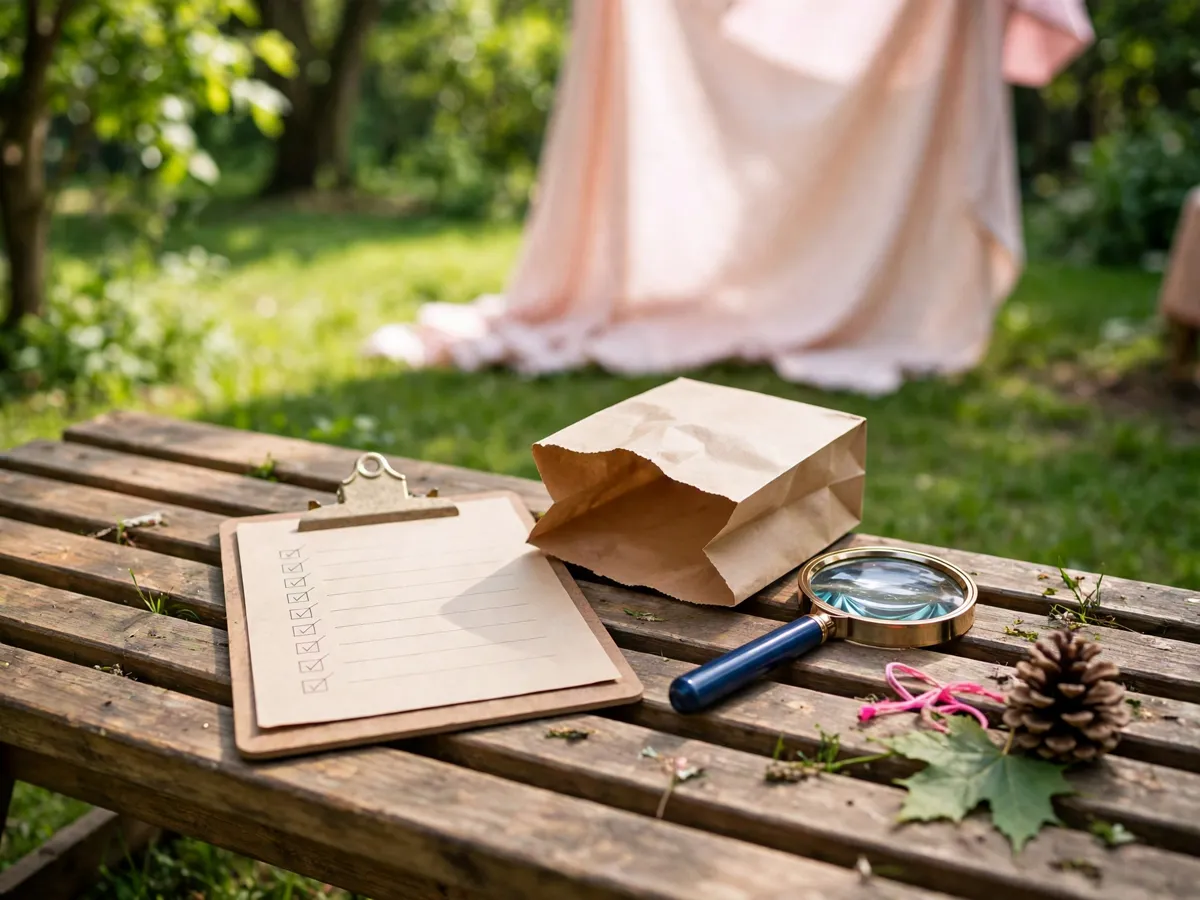
Five items, no more, and all of them findable in almost any yard: a leaf, a stick longer than your hand, a stone that is smooth, something that smells, and something the child chooses with no rule at all. Say the list at the door, count it on fingers, and say it again at the first corner of the yard.
Ages 2-3 hunt two finds, not five: the leaf and the free choice. Ages 4-6 take the whole list and add the describing job — each find gets one word said out loud at the bench: bumpy, thin, green, cracked.
Time: 2 minutes at the door. Supplies: nothing but a hand to count on.
2. One bag each, small bags
A lunch-size paper bag per hunter, folded down twice at the top so it stays open like a cup. The bag is the basket, the trophy shelf and the ending — when the bag is full, the hunt is done, whatever the list says. Two children with two bags compare at the bench instead of racing across the yard.
Skip plastic bags for the littlest hunters: a paper bag stands up on the grass, and a two-year-old with two hands full needs a bag that holds itself open.
Time: 1 minute to fold. Supplies: one paper bag per child.
3. Walk the circuit, slowest first
Most yards have four edges: the fence line, the flower bed, the tree or the bush, and the boring middle. Walk them in the order of your own yard, and put the richest edge first while they are still keen. The rule of the walk is one rule: stay where you can see the door. A hunt that scatters is over in three minutes; a hunt that circuits lasts the half hour.
Crouch where they crouch. The best finds in a yard are at knee height and below: the clover patch, the ant line, the feather under the bush. If a hunter stops at something that is not on the list, that stop is the hunt working.
Time: 10 to 15 minutes. Supplies: the yard, in any weather that lets a paper bag survive it.
4. The bench round: empty the bag
The hunt ends at a bench, a step or the doormat, wherever the bags can be emptied in a line. Every find comes out and gets its word: the smooth stone, the cracked leaf, the stick that is longer than a hand. Line them up biggest to smallest, then count them — counting real things a child just picked up is the whole math lesson a hunt needs.
Ages 2-3 hand you each find and name it with one word. Ages 4-6 sort their own line and add the comparing words: longer, smoother, darker. Then everything goes back in the bag except one — the keeper, chosen by the hunter, that rides inside instead of the pocket.
Time: 5 minutes. Supplies: a step, a bench, or the doormat.
5. Hands washed, then the jar round
Bags down by the door, hands washed, and only then the looking closer. A clear cup of water turns anything into a magnifying round: drop the keeper stone in and watch it grow, hold the leaf against the light, roll the stick to see both of its sides. Five minutes of close looking finishes the hunt at the table instead of the trash can.
Nothing from the yard goes in a mouth — not berries, not mushrooms, not the smooth stone a two-year-old wants very badly to taste. Hands washed before the jar round is the rule that makes the rule easy: nothing to taste because nothing on the table is food.
Time: 5 minutes. Supplies: a clear cup, water, the keeper find.
The yard runs quiet
Nothing on the list turns up: shrink the list. One find, any find, chosen by the hunter — a hunt of one is still a circuit, a bag and a bench round.
The hunt ends in four minutes: switch from finding to hiding. You hide three leaves along the fence line while the hunter watches from the door, then the hunt runs again in reverse.
Two hunters, very different speeds: give the faster one the describing job. Their list is the same five, but every find needs a word before it goes in the bag.
Safety, in every round on this page
Stay in sight of the door the whole circuit, and keep the water butt, the pond, the tool corner and the grill out of the hunt entirely. For anything with a hazard in it — scissors, heat, water, small parts — the same rule applies: an adult, close enough to act. Nothing from the yard goes in a mouth, and hands get washed before the jar round.
Save this for the next dry afternoon
Pin the checklist that matches your yard, then come back when the bags are folded — the Kids Activities collection holds the backyard play setups and the nature play guide that turn the same yard into next week’s round.