 KidNestClub
Kids Room & Toy Storage
Toy Storage Ideas: 30 Setups by Room and Age
Thirty storage setups, one per room, each picked by the age of the child using it: floor baskets for Ages 2-3, open cubes for Ages 4-6, a high tray shelf for Ages 7+. Every setup lists the supplies, the minutes it takes and the one rule that keeps it working.
By KidNestClub · Updated 13 November 2026
Total scope: 30 setups · Ages 2-3, 4-6 and 7+ · 5-30 minutes each · the printable label pack at the end.
Read the list top to bottom, or jump to the room you are standing in: the bedroom runs first, then the living room, the hallway, the kitchen, the closet and the garden. The toy rotation checklist decides which toys stay out at all, the picture label systems page is the close-up of the last setup, and the plush toy storage plan carries the stuffed animals, which none of these bins was built for.
Two numbers before you buy anything
Measure the free floor strip where play lands, and your child's shoulder height. A container taller than the shoulder line becomes adult storage the day it arrives; one wider than the strip means walking around it every night. Pick one room and one setup to start, and run the anchoring pass before the toys go in: a system you cannot tip is a system that stays.
1. Three floor baskets in a row
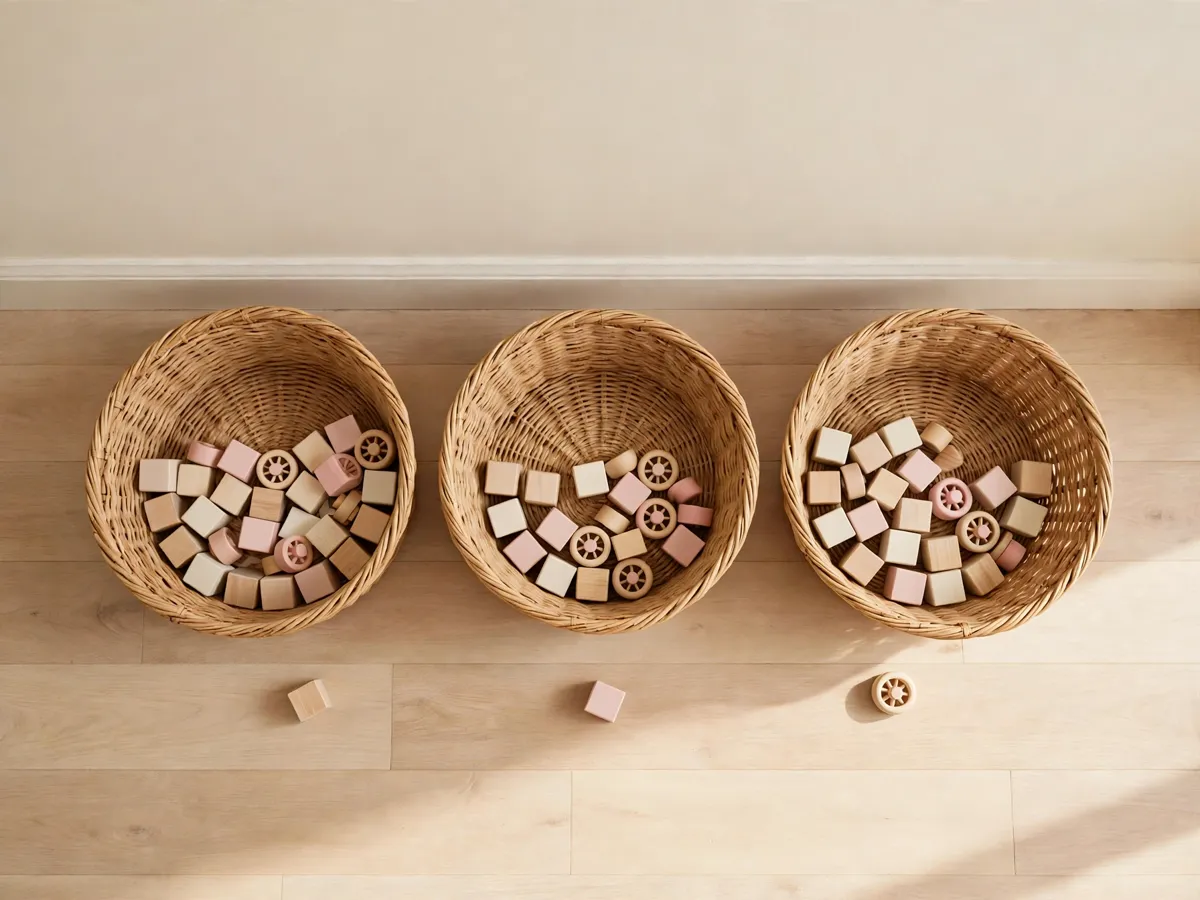
One for blocks, one for pretend pieces, one for anything with wheels. Stand them against the wall the toys already drift toward, a hand apart, so a child can drop a piece in while walking past. Keep each basket half full: a rim-packed basket spills its load on the floor by the second morning.
Ages 2-3 · 5 minutes · the bedroom · three wide baskets, no lids, the rim below the shoulder line.
2. A low cubby with one tray per square
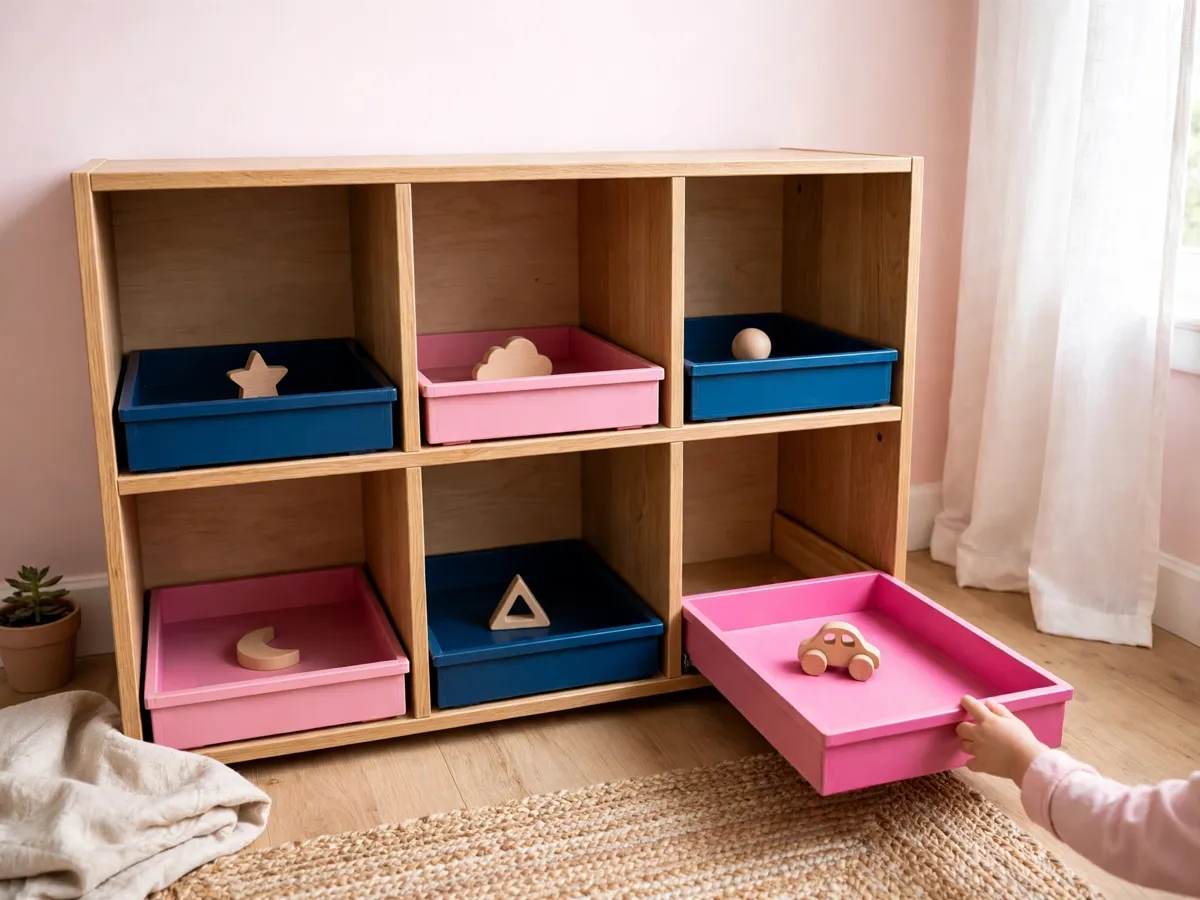
A tray comes out whole and goes back flat, so nothing has to be picked out of a deep box. Tape a photo of the contents to the front of each square; a photo is read at a glance, handwriting is read by nobody. Keep the top of the unit clear: a cubby that grows a lamp and a laundry pile stops being a toy shelf.
Ages 2-3 · 20 minutes · the bedroom · a low cubby unit plus three wide shallow trays.
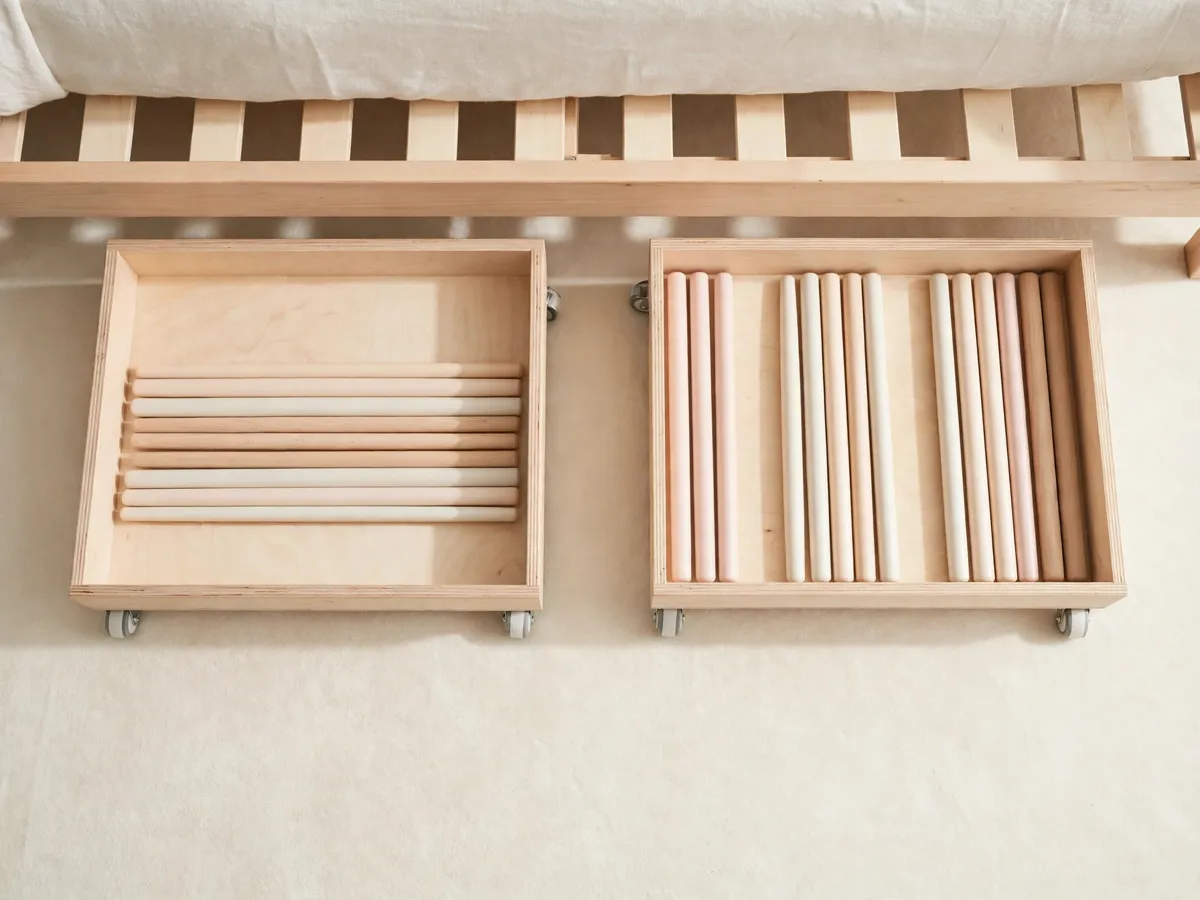
3. Two shallow drawers under the bed
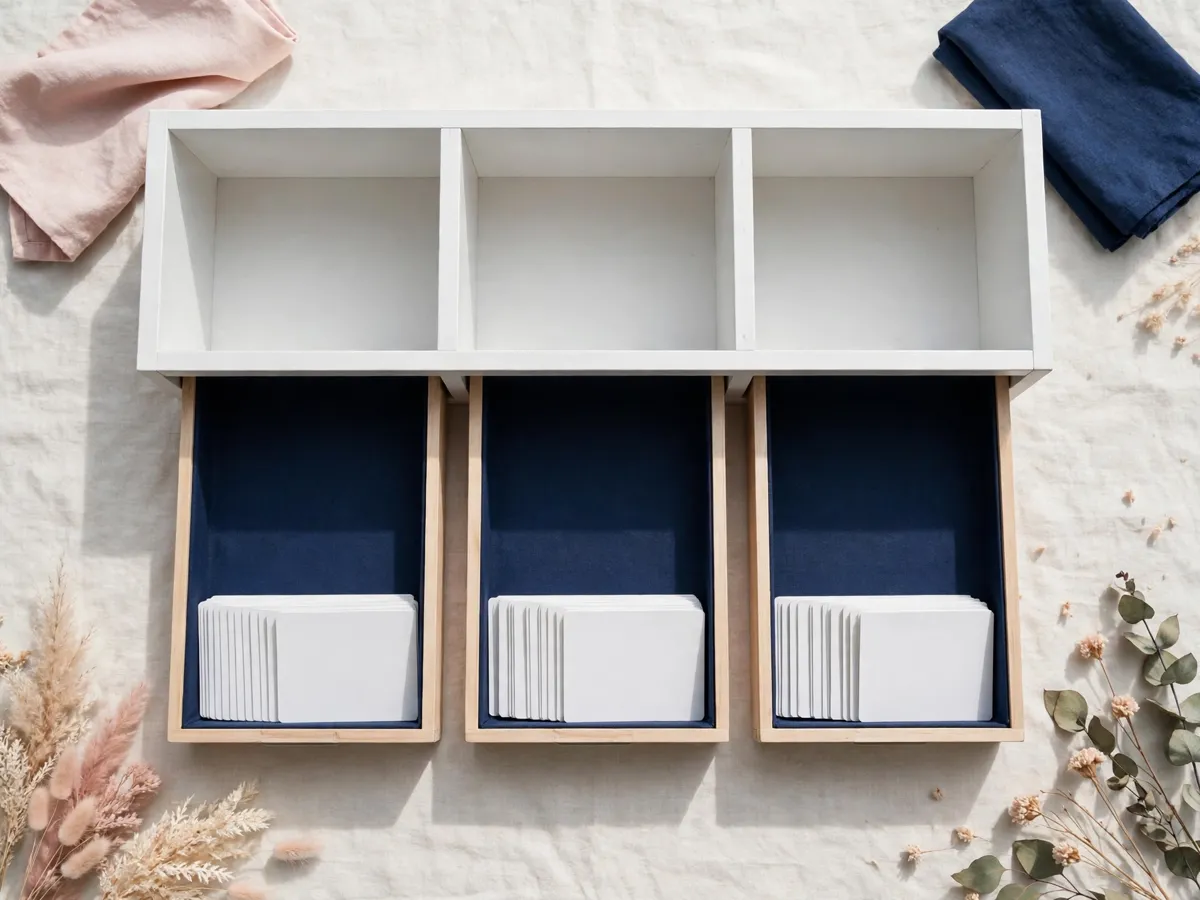
Bricks, train track and the long pieces that never fit a box go here, laid flat. Give each drawer a lid that lifts off in one hand, never a hinged lid that drops. When a lid is heavy it stays with an adult: lift it clear, hold it, set it down flat, then let your child reach in.
Ages 4-6 · 15 minutes · the bedroom · two shallow drawers on casters that clear the bed frame.
4. A front-facing ledge in the reading corner
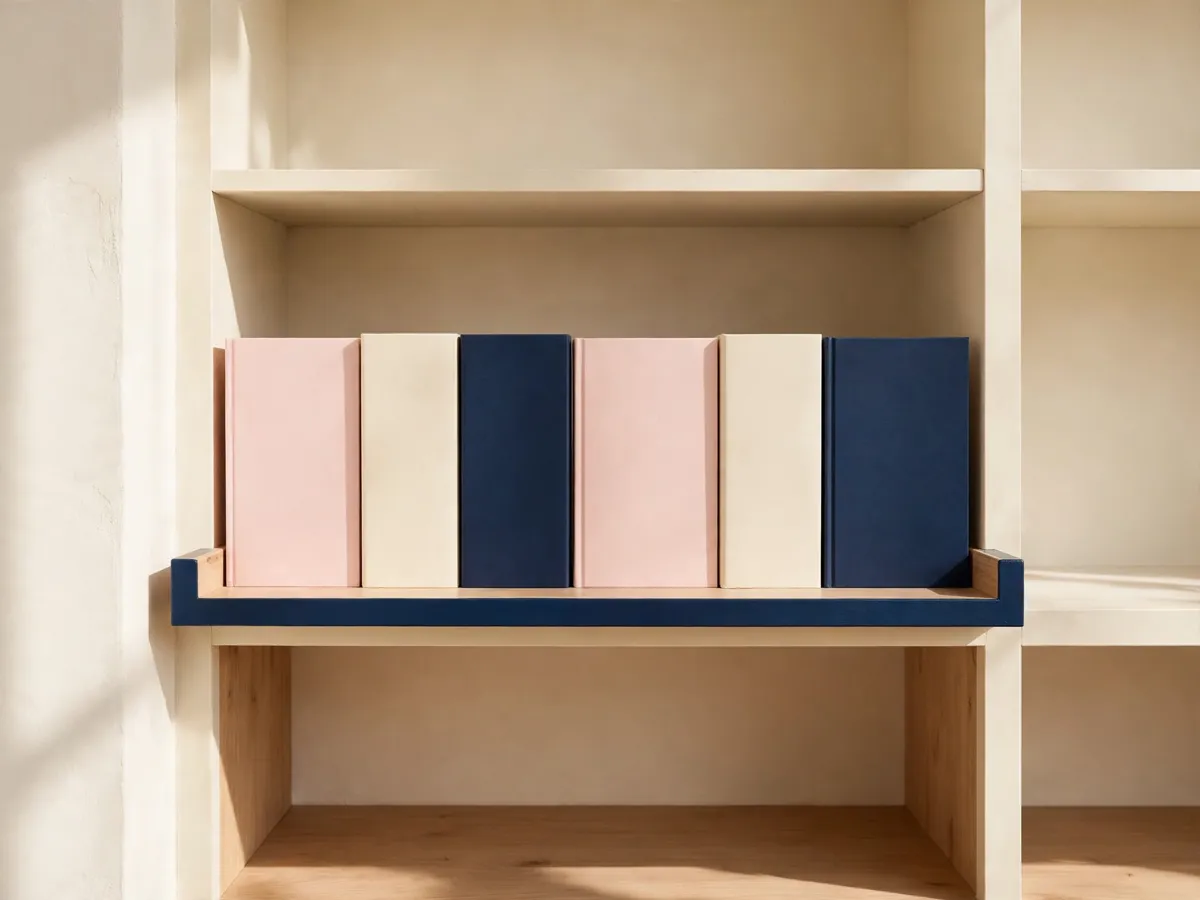
Five or six books, covers out, spines behind, on a narrow ledge with a lip, mounted at chest height by an adult. A child picks from what is visible, and a row of spines shows nothing at floor level. Keep it to one row: the ledge is for the books that get re-read, not the library.
Ages 3-8 · 15 minutes · the reading corner · one narrow ledge with a lip, fitted by an adult.
5. A clear bin for the toy that comes out daily
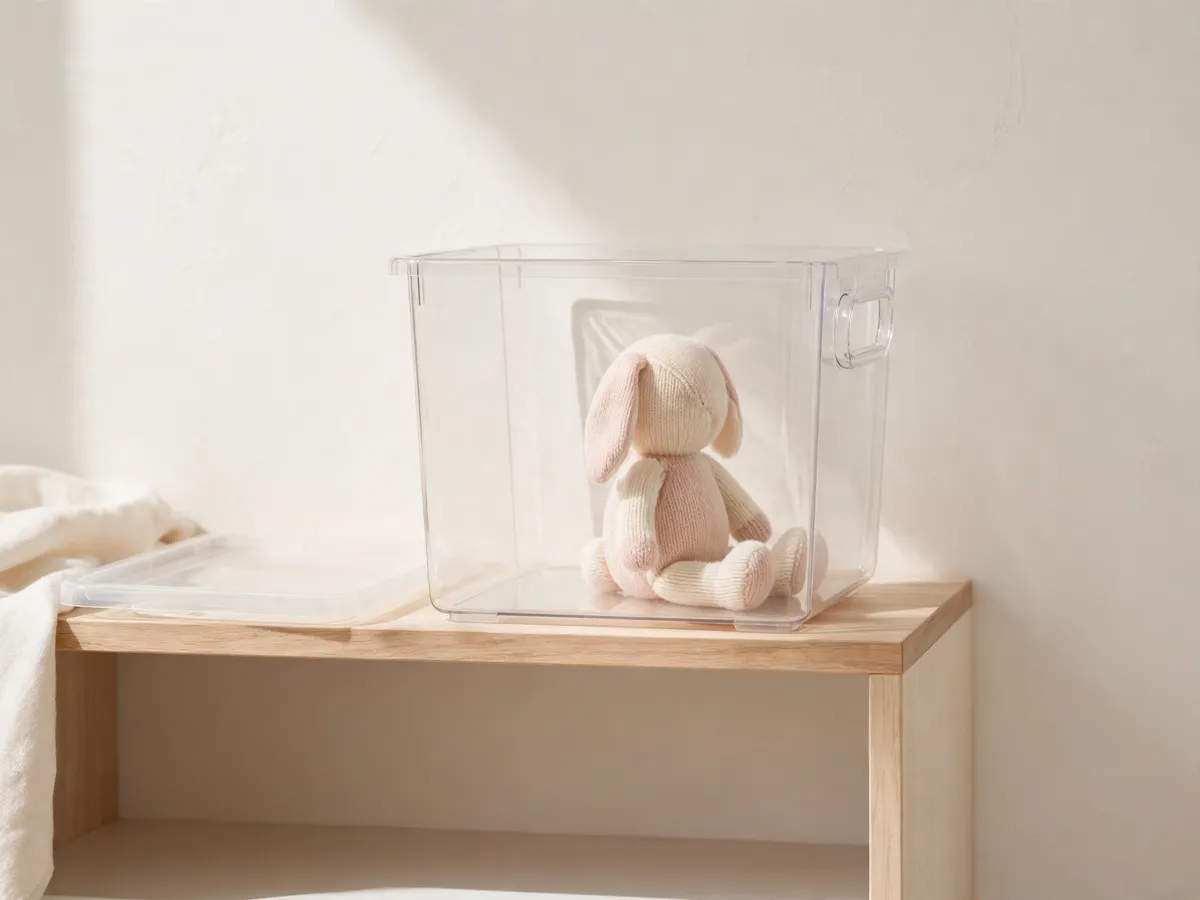
The toy that is out every day gets the most visible home: a clear bin on a low shelf, lid off, handle at the front. A child reads the contents without opening it and puts the toy back where it can be seen. When a new daily favourite arrives, it swaps places with the old one, and the old one goes to the rotation shelf.
Ages 2-6 · 10 minutes · the bedroom · one clear bin with a handle, on a low open shelf.
6. The open-front shelf, nothing above the shoulder line
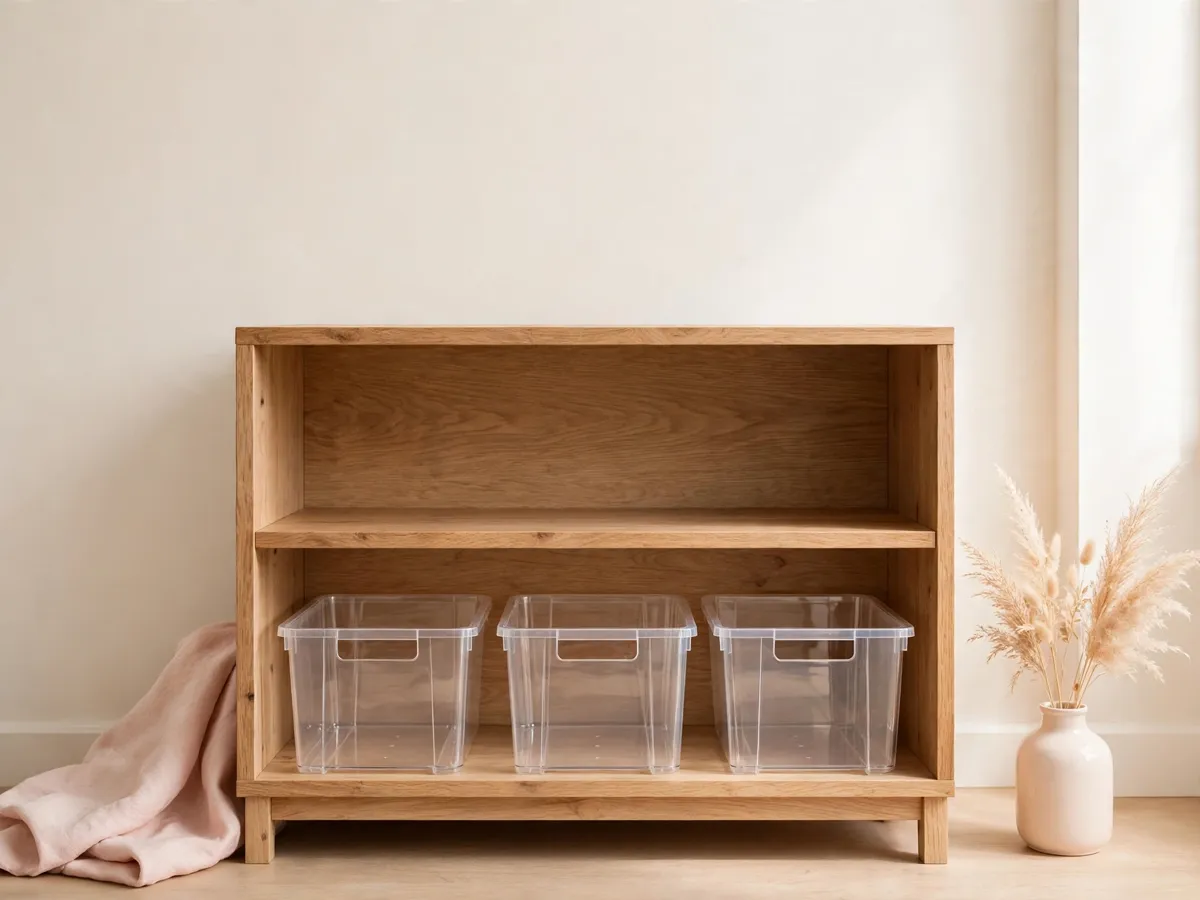
An open bookcase with the toy shelf at the bottom: anything a child can reach, the child can put back. Keep every bin front-facing, nothing deeper than a hand reach, and the shelf above the shoulder line is the adult's shelf. A unit that wobbles when a child leans on it gets anchored before the toys go in.
Ages 4-6 · 20 minutes · the bedroom · one open-front unit, bins no deeper than a hand reach.
7. A back-of-the-door rail with hooks
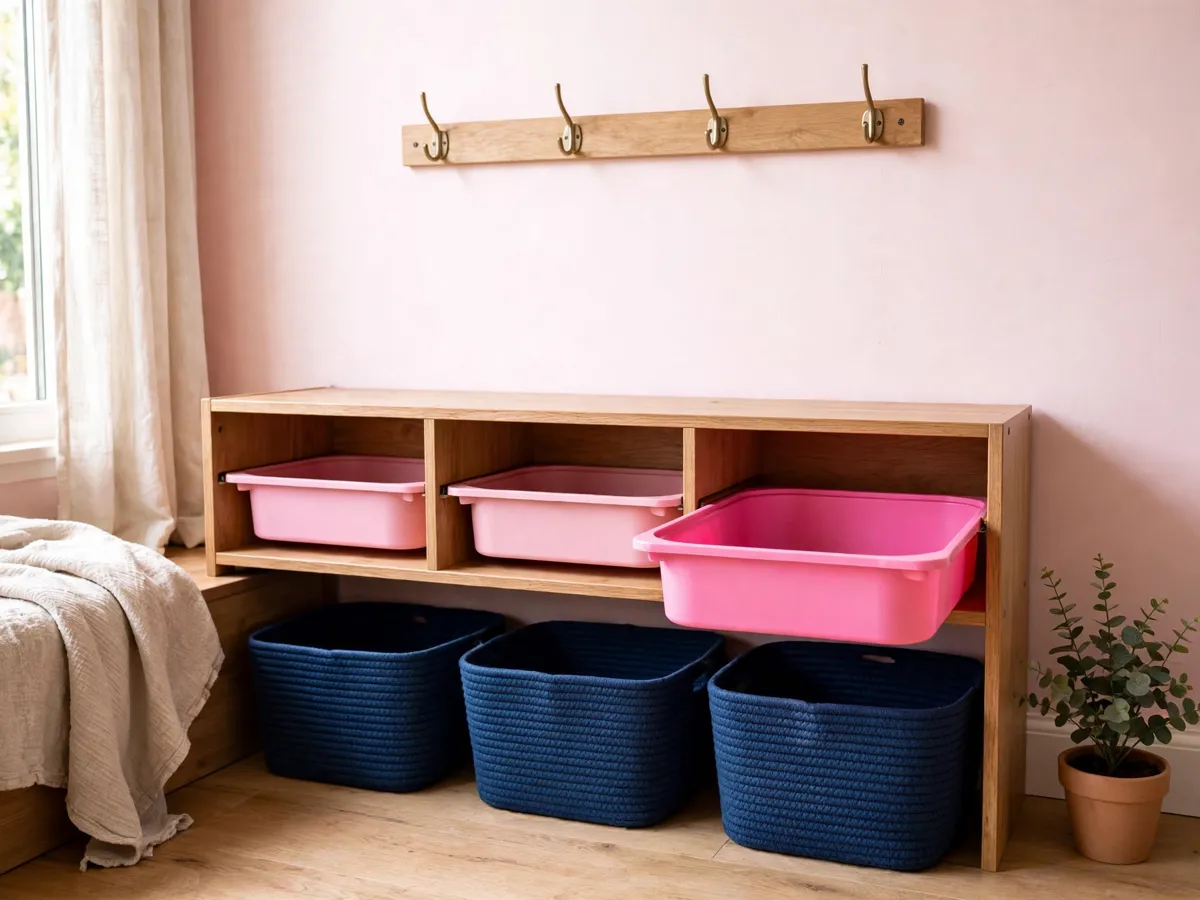
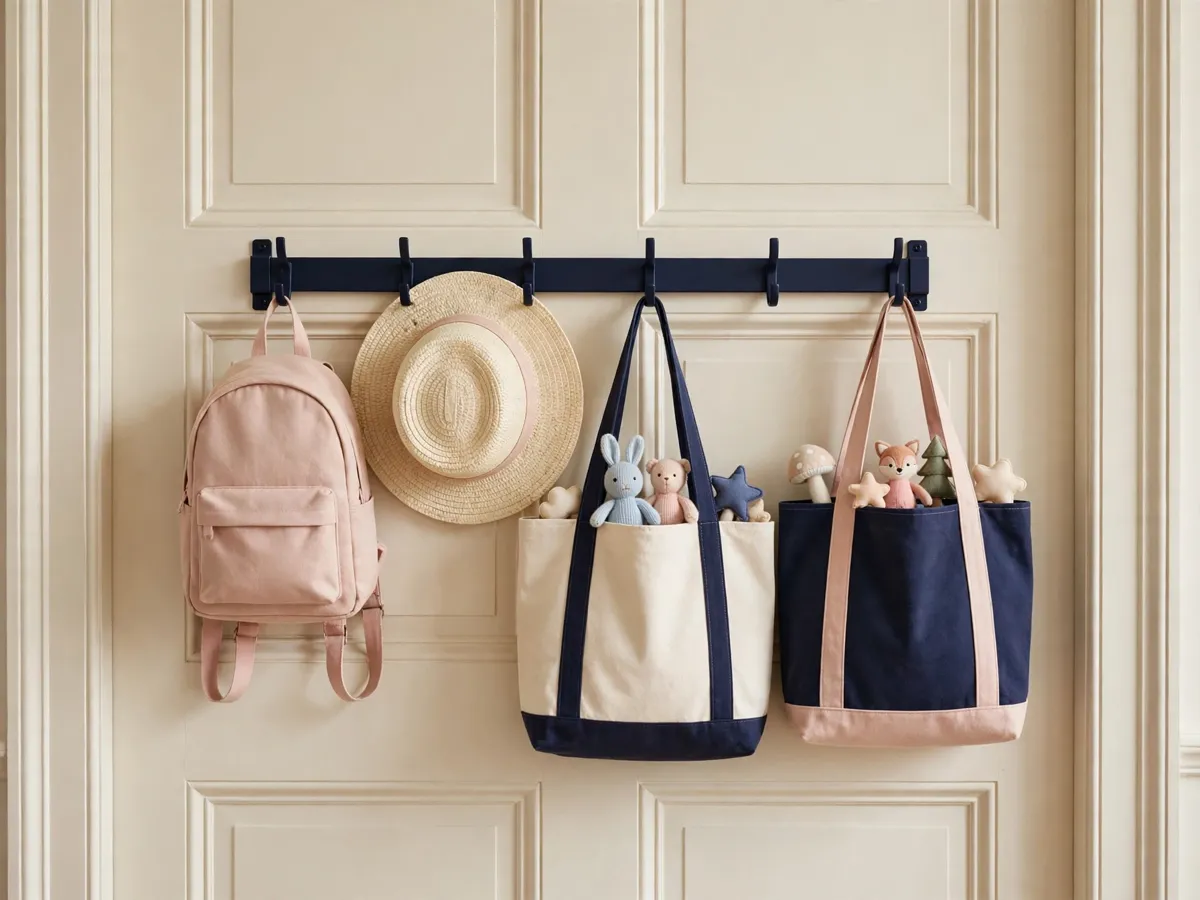
One rail with four hooks on the inside of the bedroom door, fitted by an adult into a stud. A cape, a backpack, a sun hat and a tote of small figures. The hooks go at your child's shoulder height, and nothing hangs where a child would stand on the bed to reach it.
Ages 4-6 · 20 minutes · the bedroom · one rail, four hooks, an adult fits it.
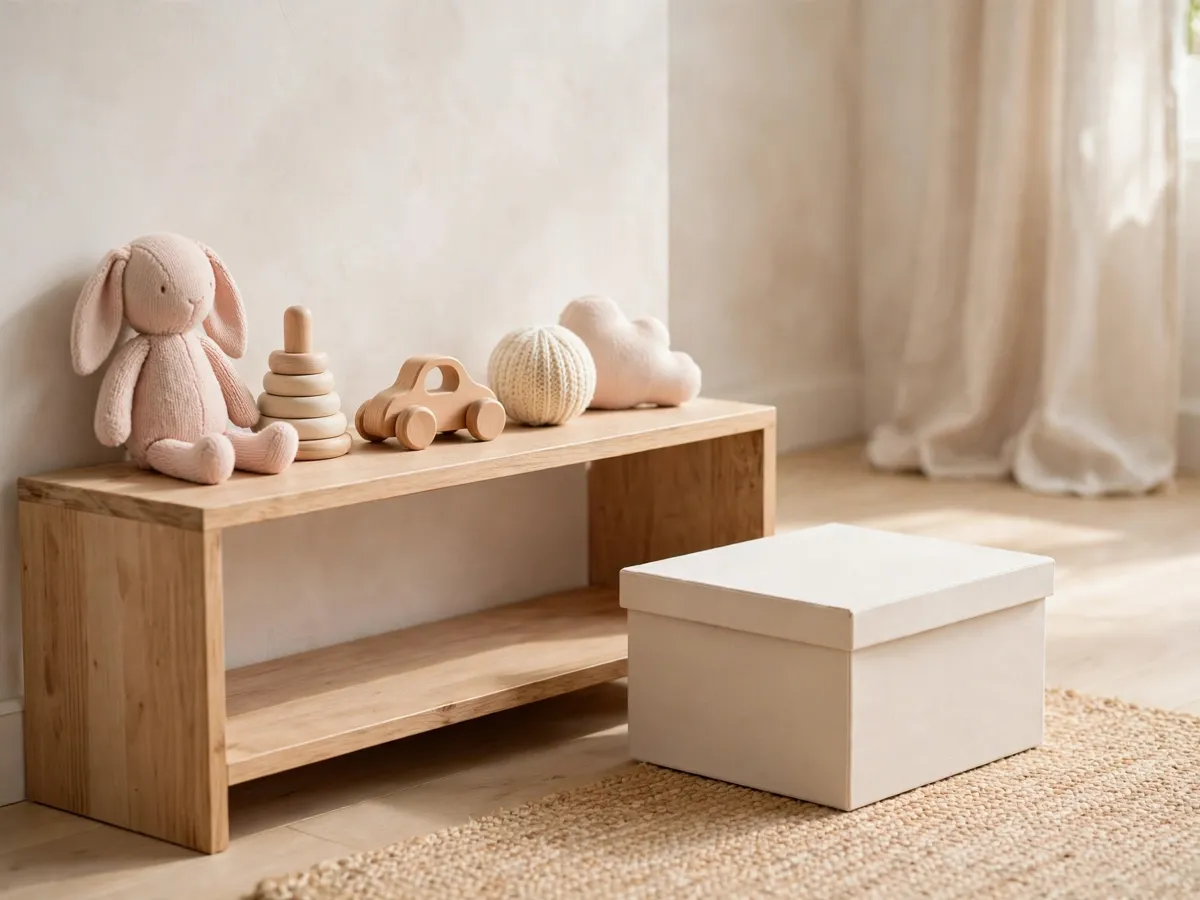
8. The storage bench with a front-opening box
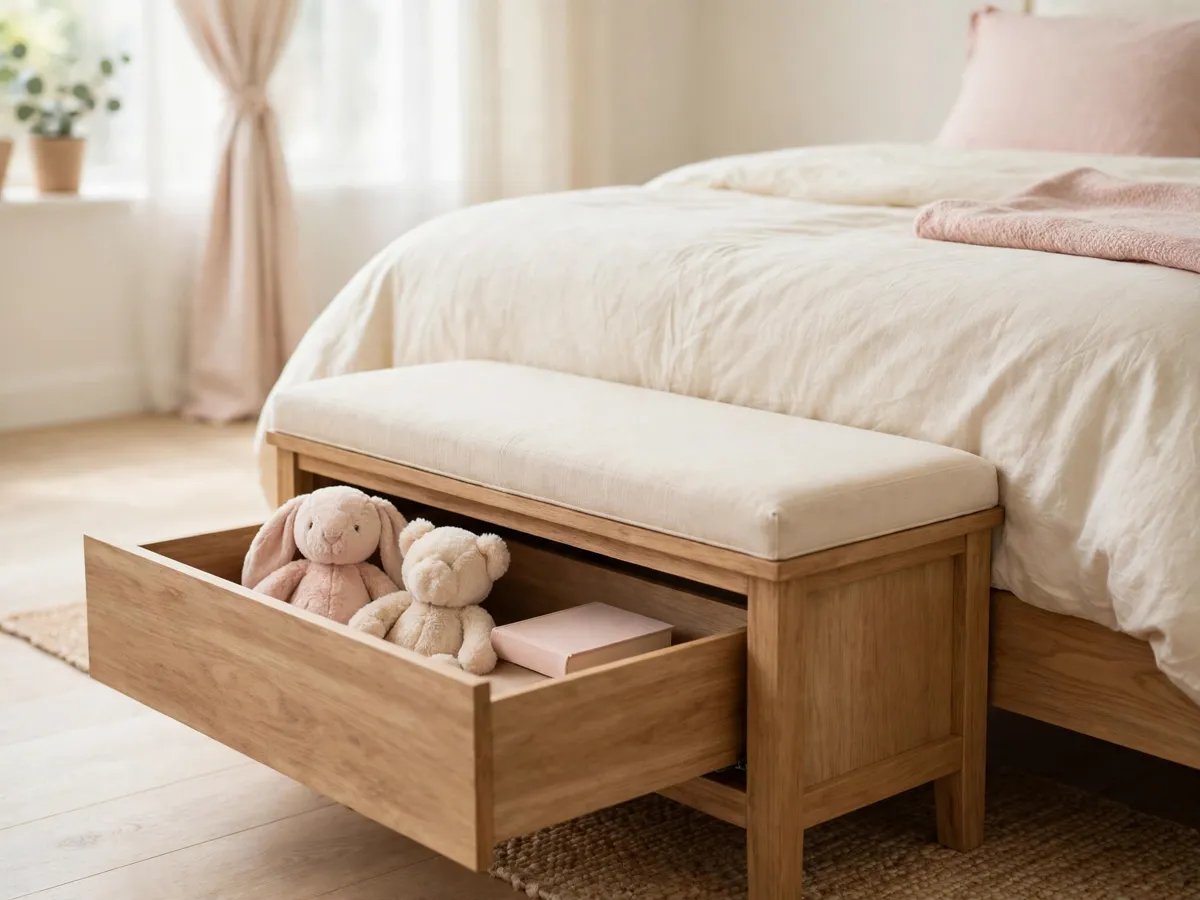
A bench against the bed with one box that pushes out from the front, no lid to lift. It holds the night-time overflow: the two stuffed animals that sleep over, a book, a cup. The box stays a third full; the bench top is a seat, not a shelf, and the box is the one place the room is allowed to be a little full.
Ages 4-6 · 10 minutes · the bedroom · one front-opening storage bench, no hinged lid.
9. The sofa-side basket
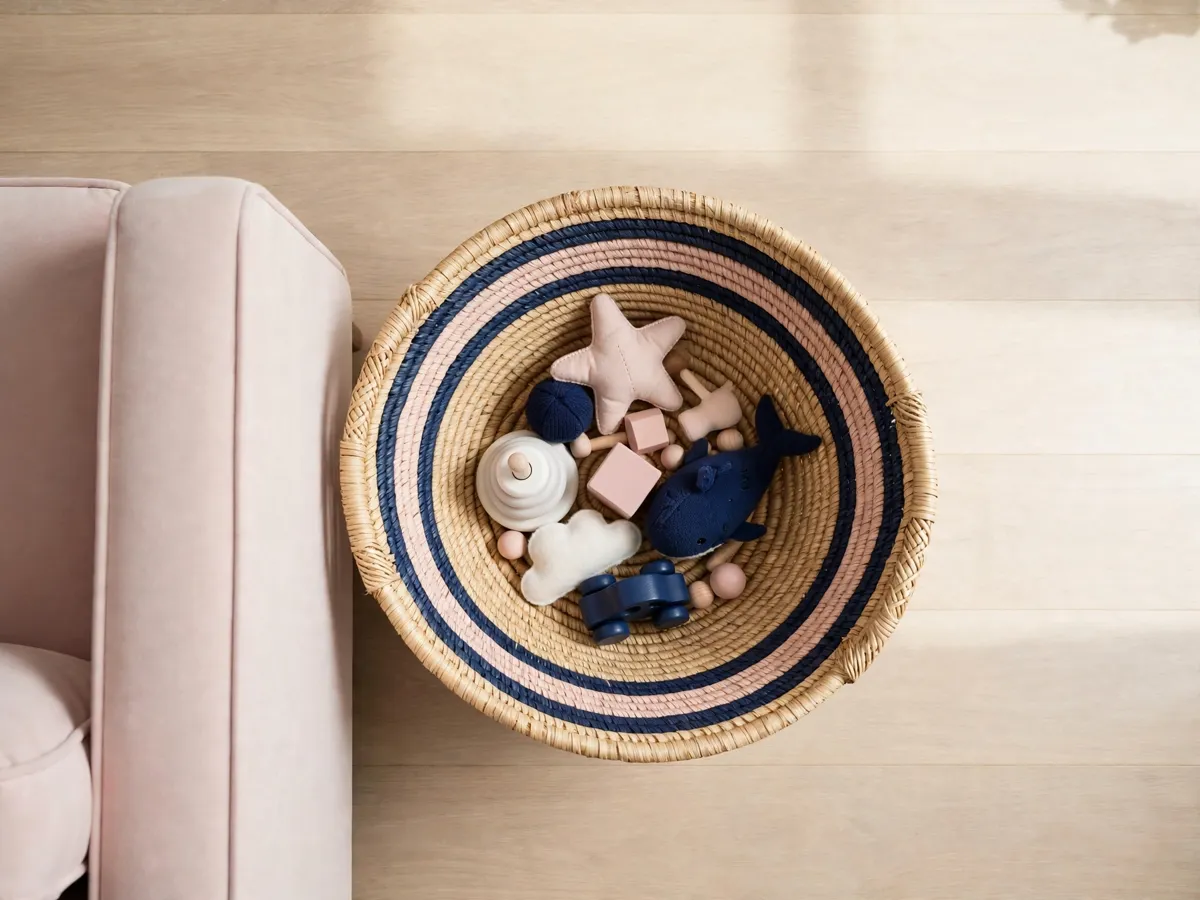
A basket on the floor by the sofa arm, within one step of where the child sits. It holds the day's toys: the ones on the sofa, the ones on the rug that started the day there. At story time the basket moves to the arm and everything in it goes back in while the story is read. One basket, one step, no carrying.
Ages 2-6 · 5 minutes · the living room · one wide basket by the sofa arm.
10. The coffee-table cube, one tray per square
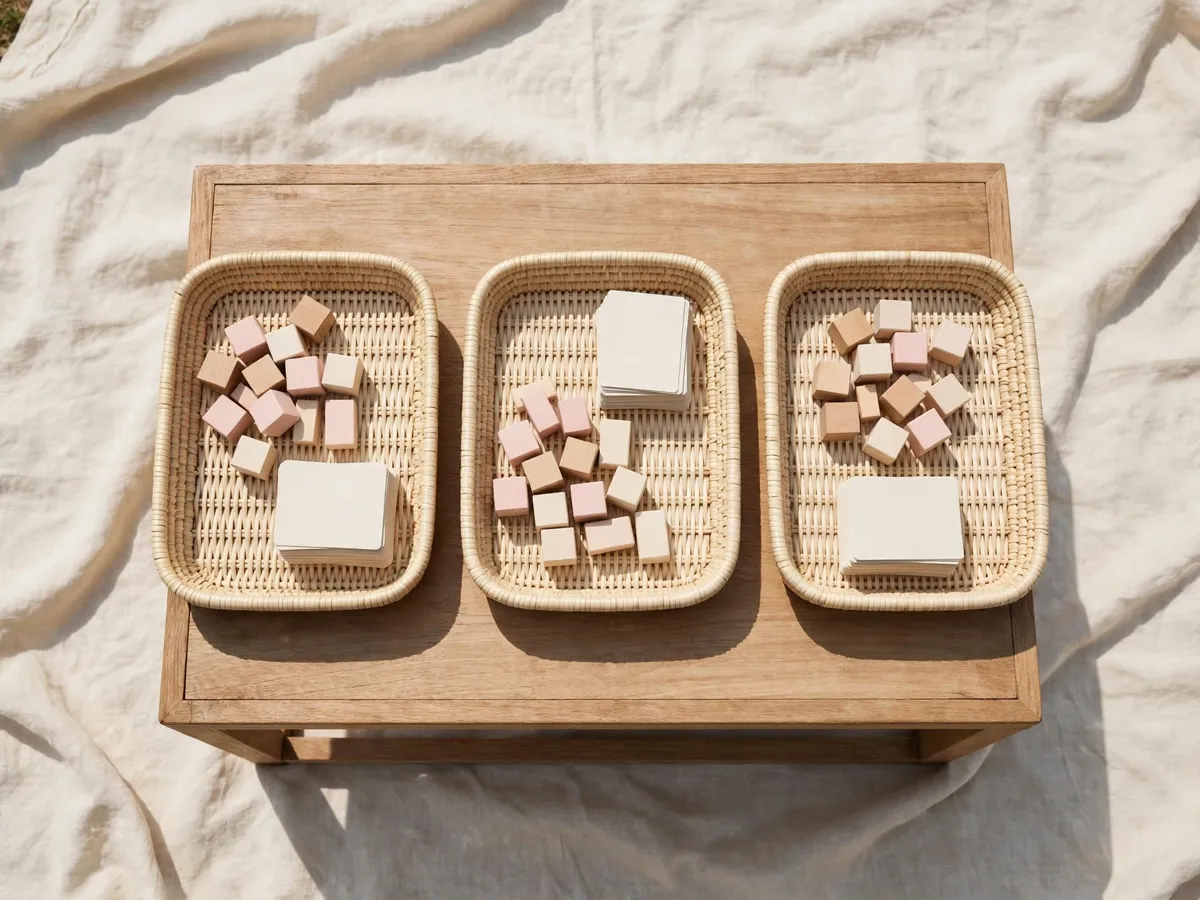
A low cube table where each top square holds one shallow tray: the blocks, the card games, the puzzle that comes out on rainy days. The tray keeps the pieces together and comes off the table whole. One tray per square, never stacked, and the table is clear of toy by the time the story is halfway through.
Ages 4-6 · 15 minutes · the living room · a low cube table and three slide-out trays.
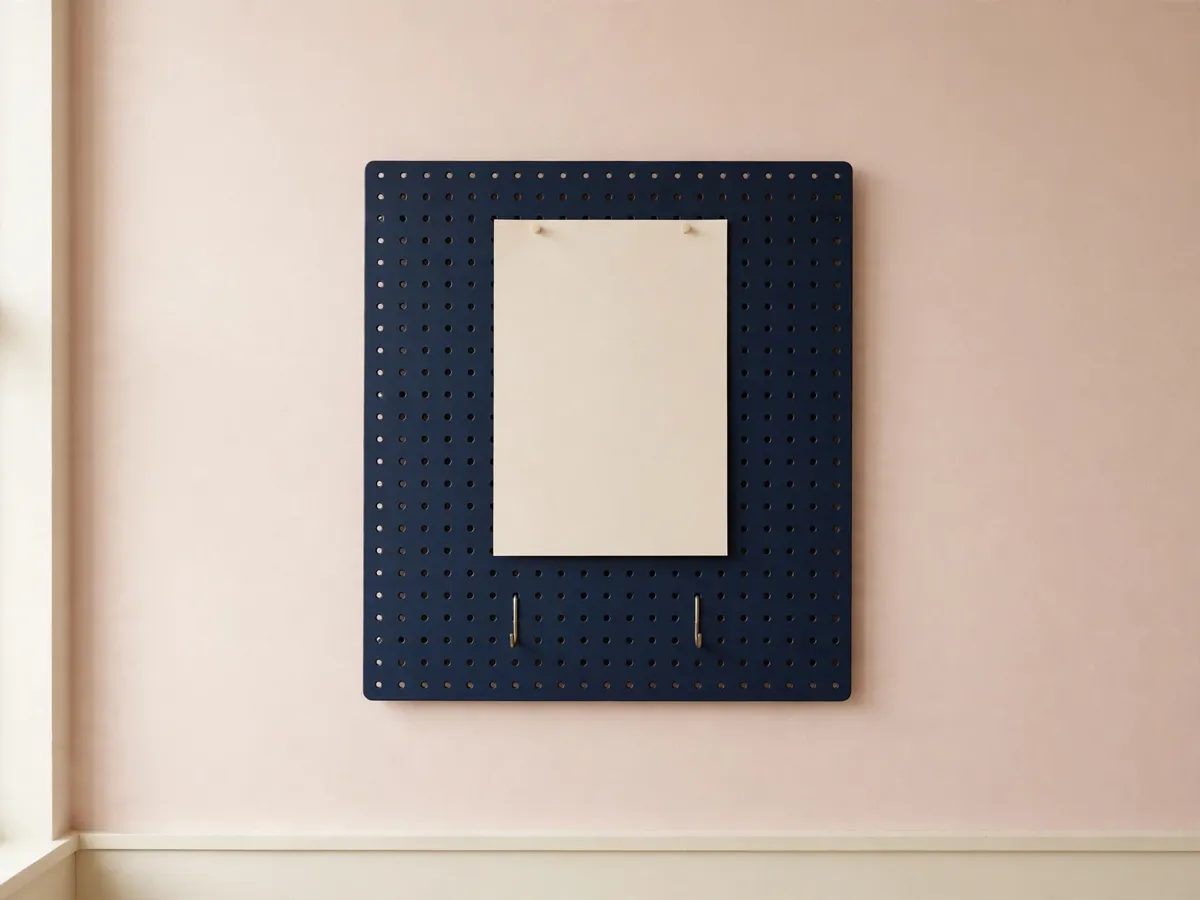
11. A wall pegboard for the flat pieces
The flat things that never fit a box: a cardboard town, the wooden train table mat, the paper art that has to dry. One pegboard at child height holds them vertical, and the table is free for the next thing. Hooks for the tools, one shelf strip for the finished pieces. An adult mounts it, and a wobbly board comes down before a piece does.
Ages 4-6 · 30 minutes · the living room · one pegboard, a few hooks, fitted by an adult.
12. The TV console shelf, one toy out on display
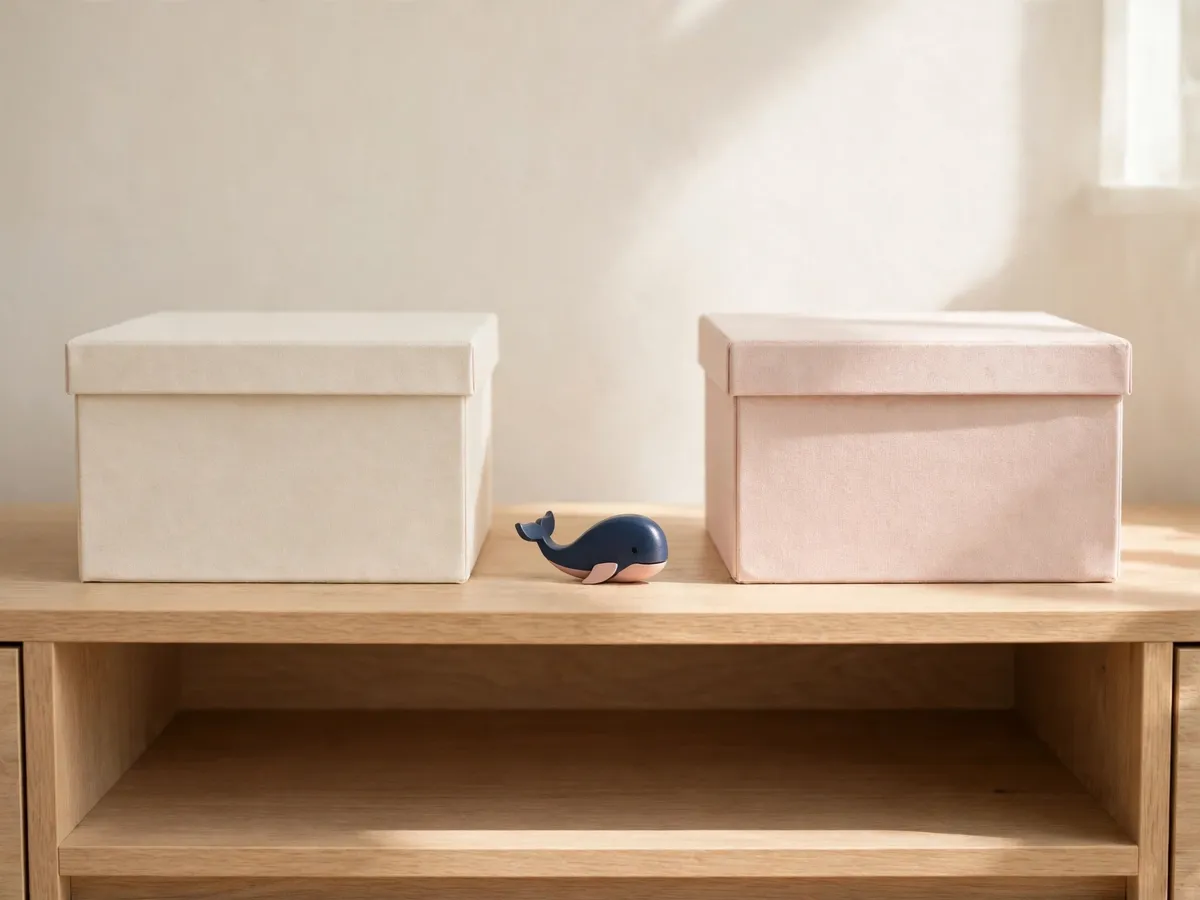
The top shelf of the TV console shows one toy, on rotation, not in a bin. One shelf spot, one toy, swapped on the weekend. The rest of the shelf holds the boxes and the remotes out of reach. The spot is the reward shape: the toy on the shelf is the toy the room allows, and the rotation keeps it moving.
Ages 3-8 · 5 minutes · the living room · the top shelf of the TV console, one shelf spot.
13. The caddy that follows the child
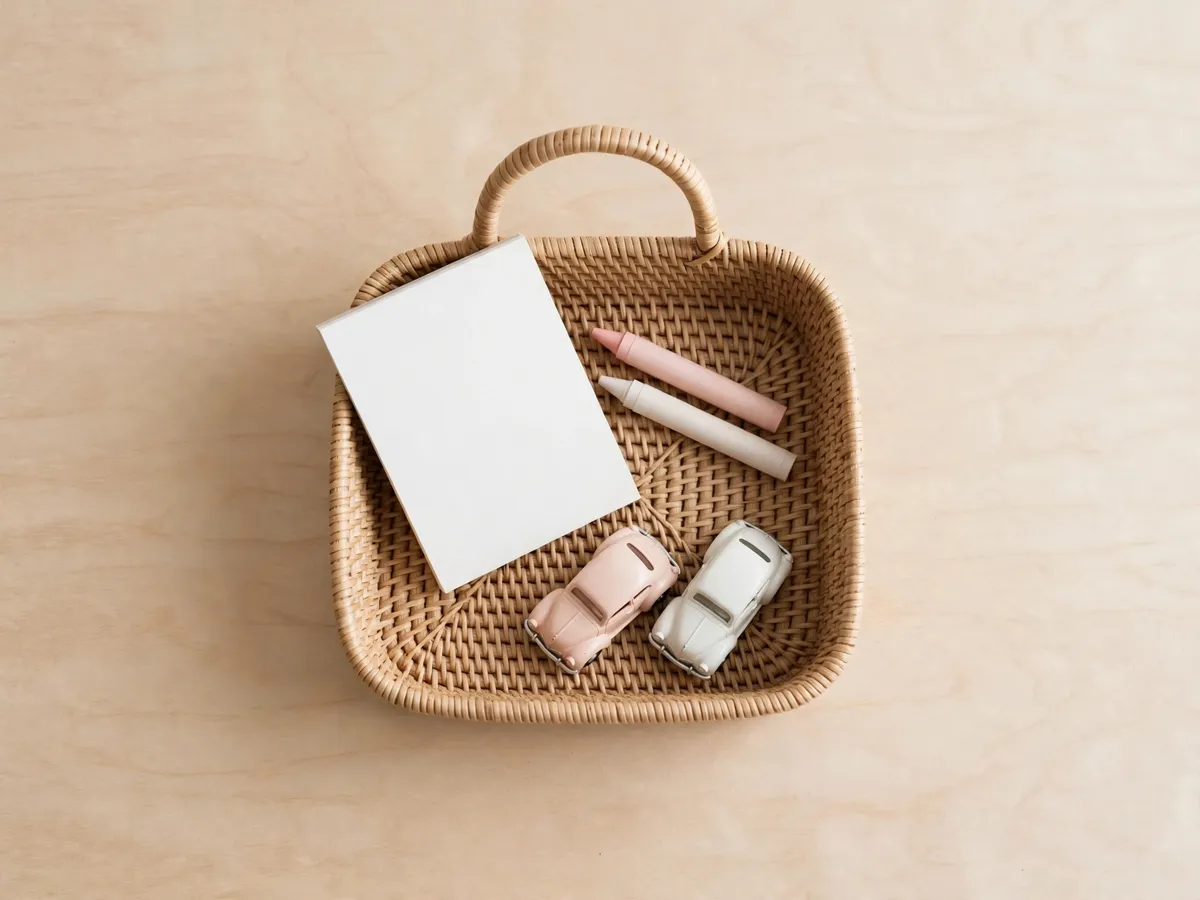
Some toys do not belong to a room; they follow the child. A deep caddy with one handle, small enough to carry with two hands, holds what travels: a pad of paper, crayons, two cars, a small figure. Where the caddy stops, the toys stop, so the kitchen table does not become a second cupboard. One caddy, not three.
Ages 2-6 · 5 minutes · any room · one deep caddy with a handle.
14. The blanket nook with a book shelf behind it
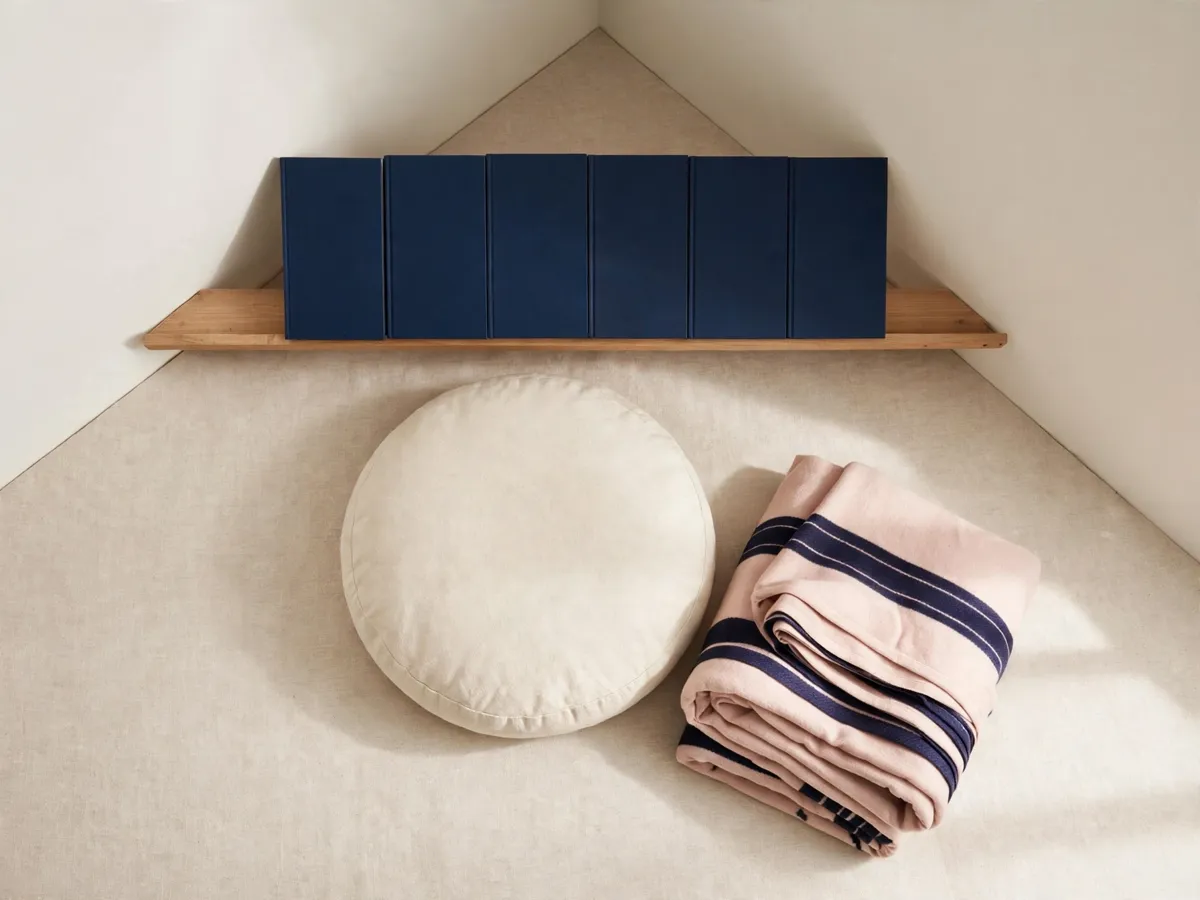
A corner of the room with a floor cushion, a blanket and one low shelf of six books behind it. The nook is the one place the room is allowed to look like a nest: the cushion stays, the blanket stays, the six books swap on the weekend. Everything else in the living room has a bin; the nook is the exception that is not a pile.
Ages 2-6 · 20 minutes · the living room · a cushion, a blanket, one low shelf of six books.
15. The weekly swap shelf
A shelf that holds half the toy library. The other half sits in one box, out of the room, and the two swap on the same evening each week. The room only stores half the toys, so every bin stays half empty, and the swap is the one night the room is allowed to be in a mess. Pick the box by age band and let the rotation checklist run the calendar.
Ages 3-8 · 10 minutes · the living room · one shelf, one box, one swap night a week.
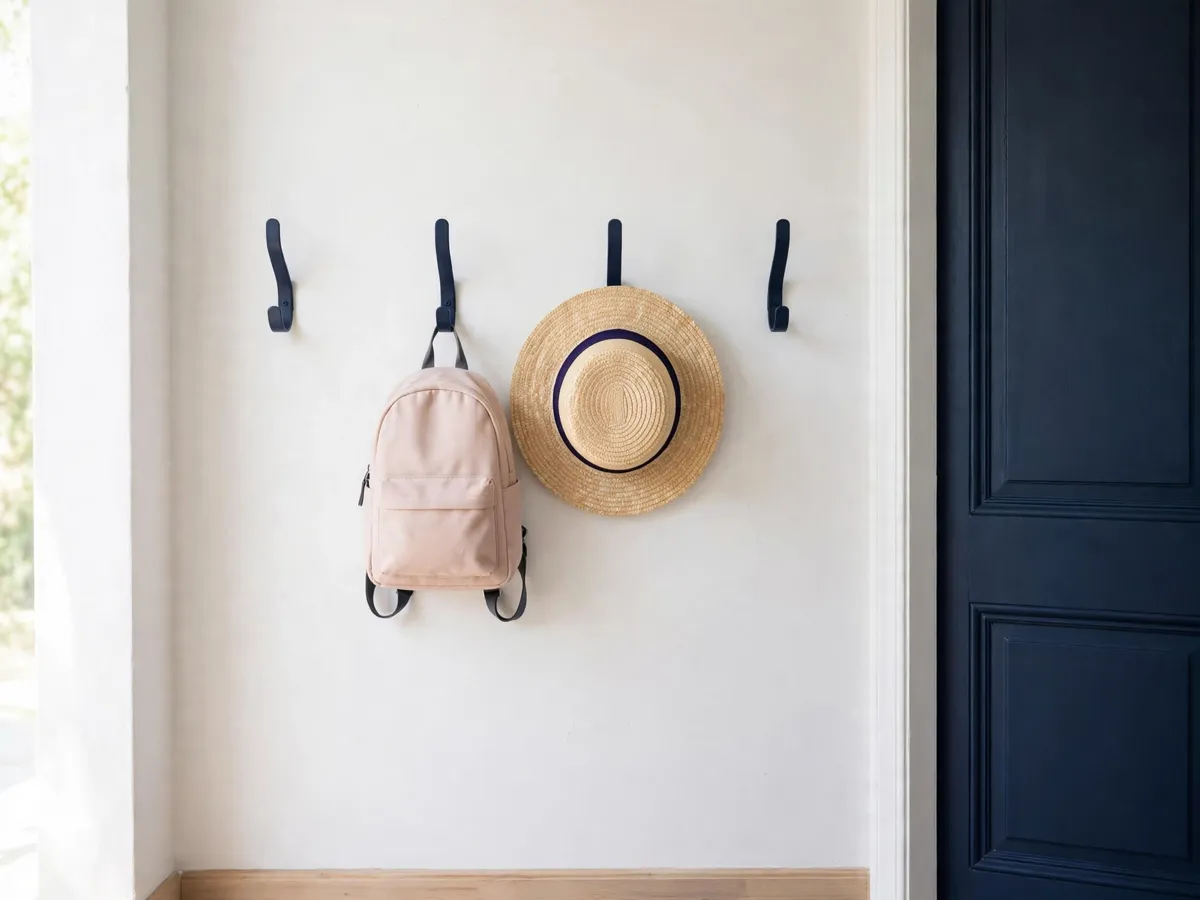
16. The wall hooks at shoulder height
Four hooks on the wall by the door, at your child's shoulder height: capes, the backpack, the sun hat, the tote of small figures. The hallway version of the back-of-door rail, for the room where the wall has a free strip. The hooks go at shoulder height and below, never where a child stands on the bed or a chair to reach.
Ages 4-6 · 15 minutes · the living room or hall · four hooks, fitted by an adult.
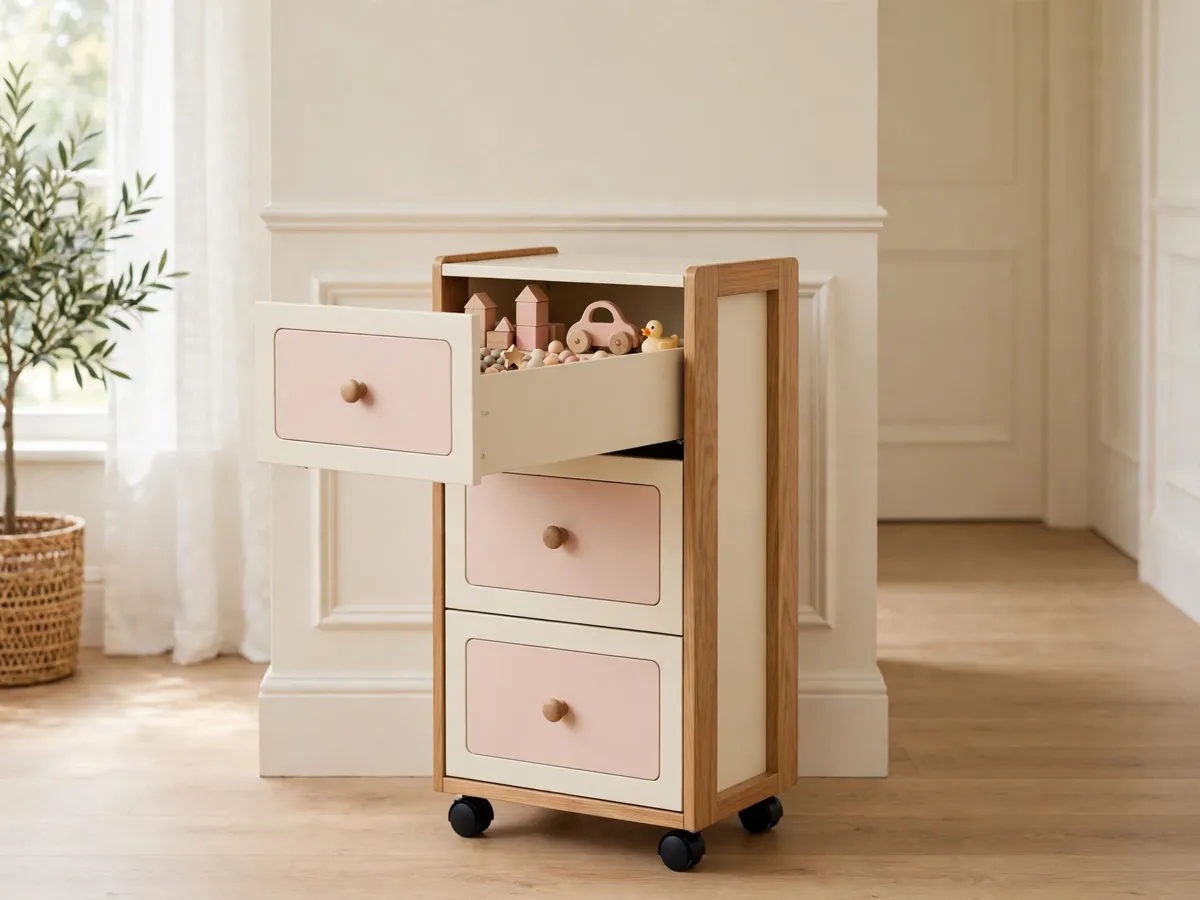
17. A slim cart with three shallow drawers
A slim three-drawer cart in the hallway, low enough to roll past the door swing. The top drawer is the day's toys on the move, the middle is the craft flat, the bottom is the overflow that no room claims. The wheels mean the cart goes to the room that is in a mess, not the toys.
Ages 3-8 · 10 minutes · the hallway · one slim three-drawer cart on casters.
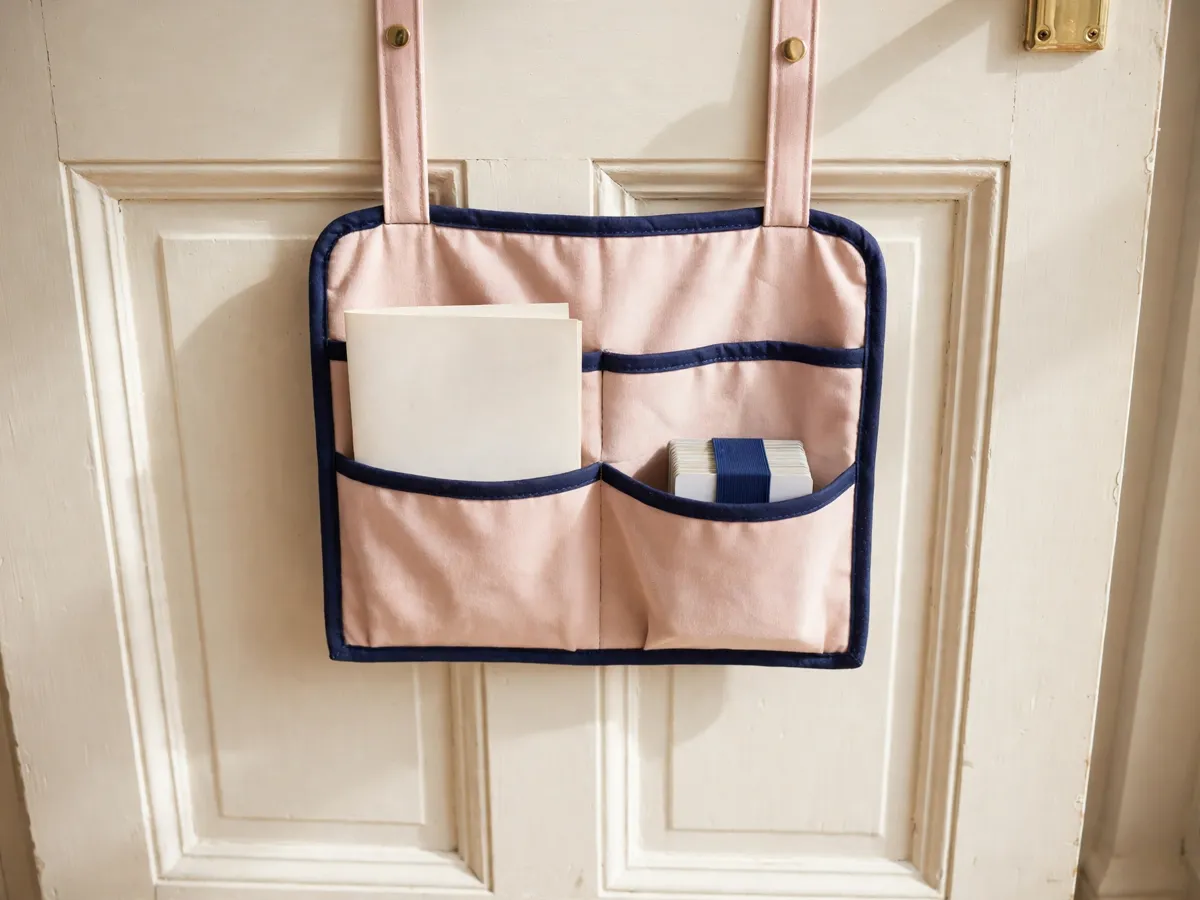
18. The door-back organizer for the small stuff
The pocket organizer on the inside of the hallway door holds the flat small stuff: paper, crayons, stickers, the card deck. One pocket per flat thing, no drawer to push out. The door is the one wall that is never empty, and the organizer is the one bin that is never on the floor.
Ages 4-6 · 10 minutes · the hallway · one door-back pocket organizer.
19. A slim shelf above the coat hooks
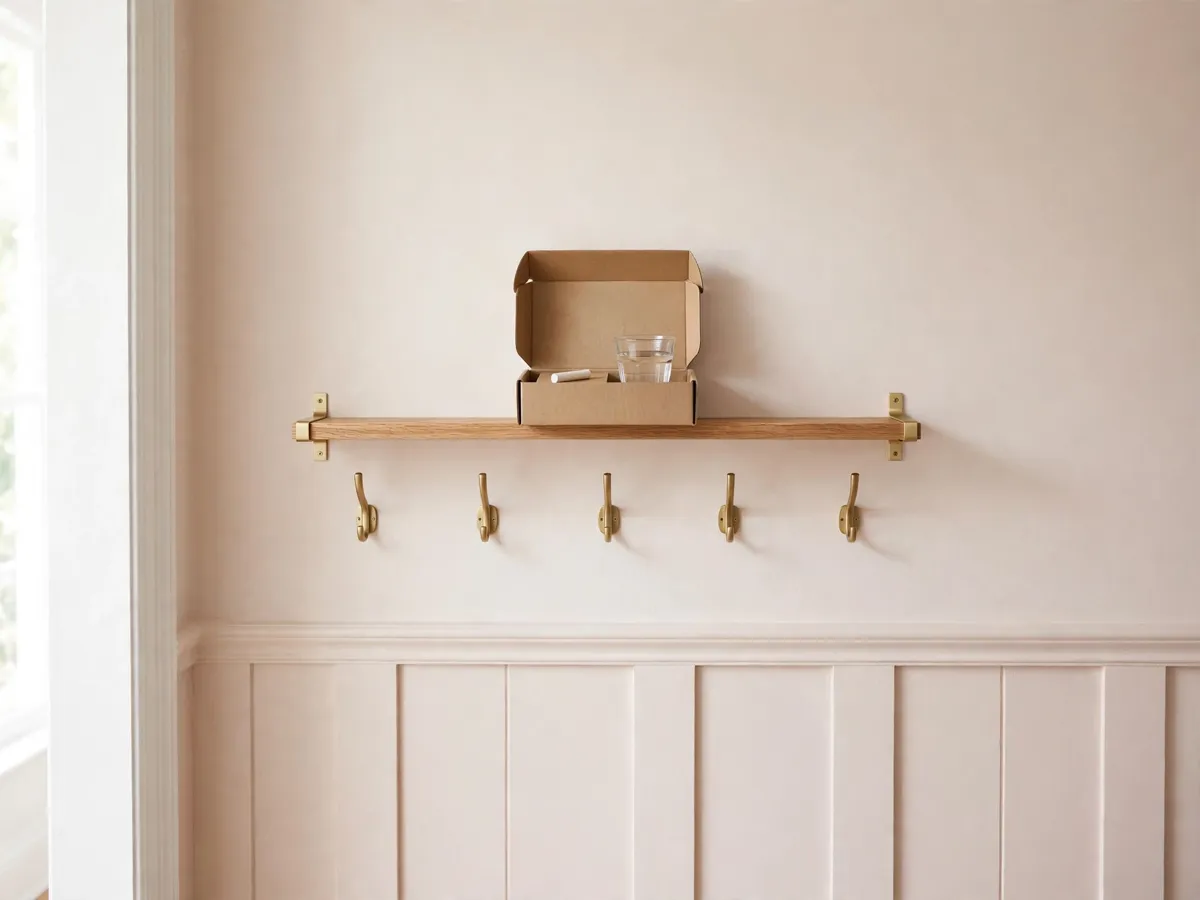
One slim shelf above the coat hooks, high enough to be out of reach of the under-3s, low enough for the kids to reach the box that lives on it. The box holds the gear that comes in muddy or wet: the water cups, the chalk, the ball after the garden. The shelf is the drop point, and the mud dries out by morning.
Ages 4-6 · 10 minutes · the hallway · one slim shelf, one open box.
20. The high-shelf tray for small pieces at the table
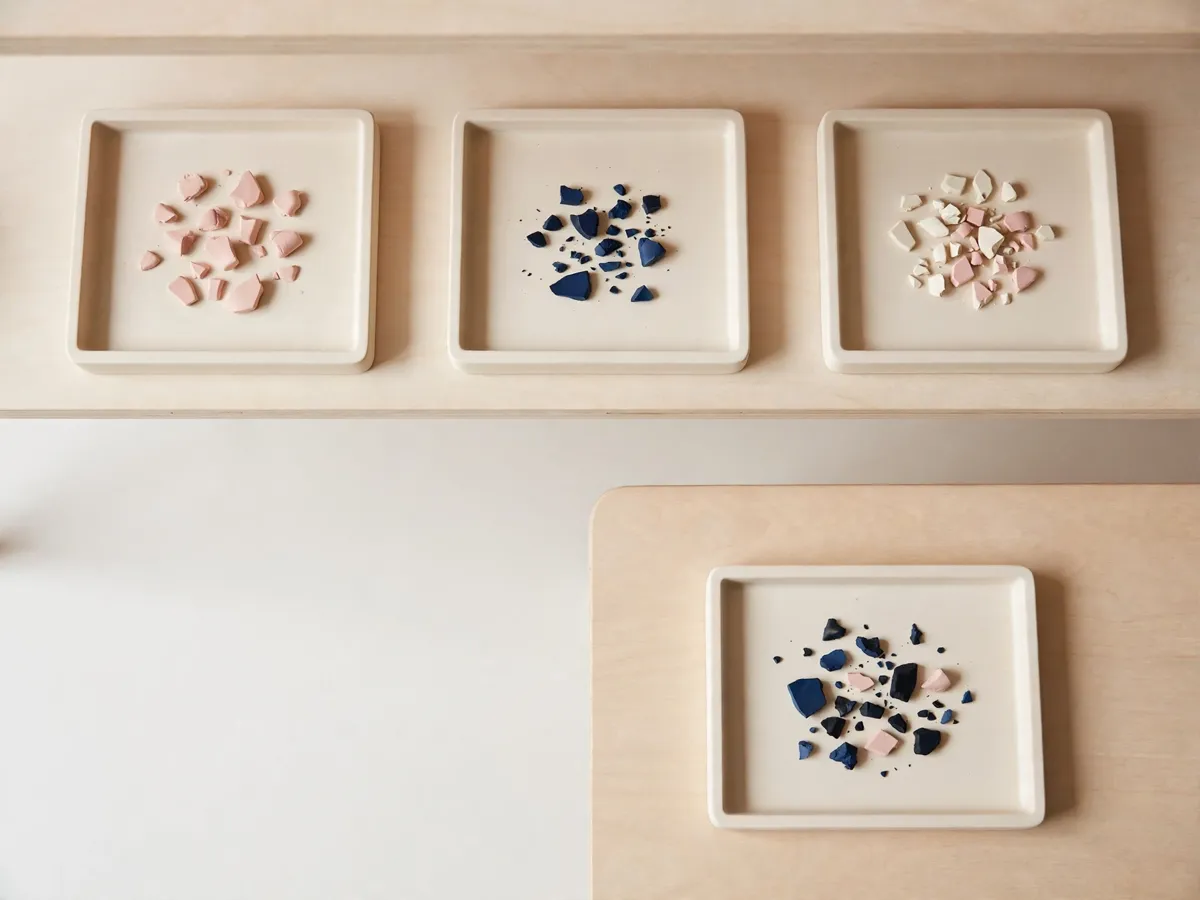
The pieces that go in the mouth of an under-3 — a bead, a button, a marble — live up high, out of reach, in a shallow tray with a raised edge. Your child asks, an adult lifts the tray down and the two of you work at the table together. A paper-towel tube is the quick test: a piece that drops through it stays on the tray, not on the rug.
Ages 7+ · 20 minutes · the kitchen table · three shallow trays; small parts away from under 3, an adult lifts the tray down.
21. A caddy by the high chair for mess play
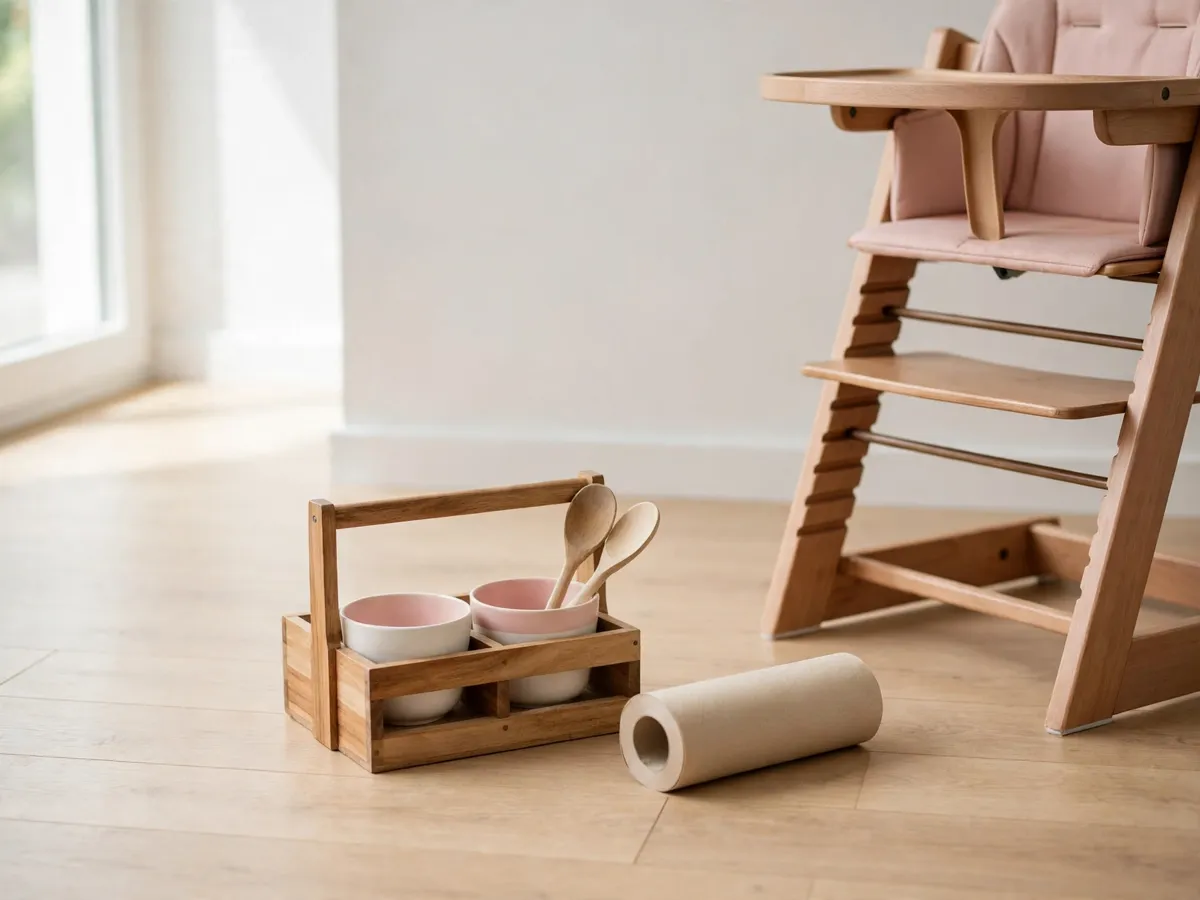
The mess-play kit stays by the high chair, not in a box across the house: one caddy with the bowls, the spoons, the playdough mat and a paper roll. The kit is out when mess play happens and back on its shelf when it is done, so the kitchen floor is the one place the mess is allowed. The caddy carries the kit to the washing-up spot on clean-up.
Ages 2-3 · 10 minutes · the kitchen · one caddy, bowls, spoons, a playdough mat.
22. A bin under the counter for the table games
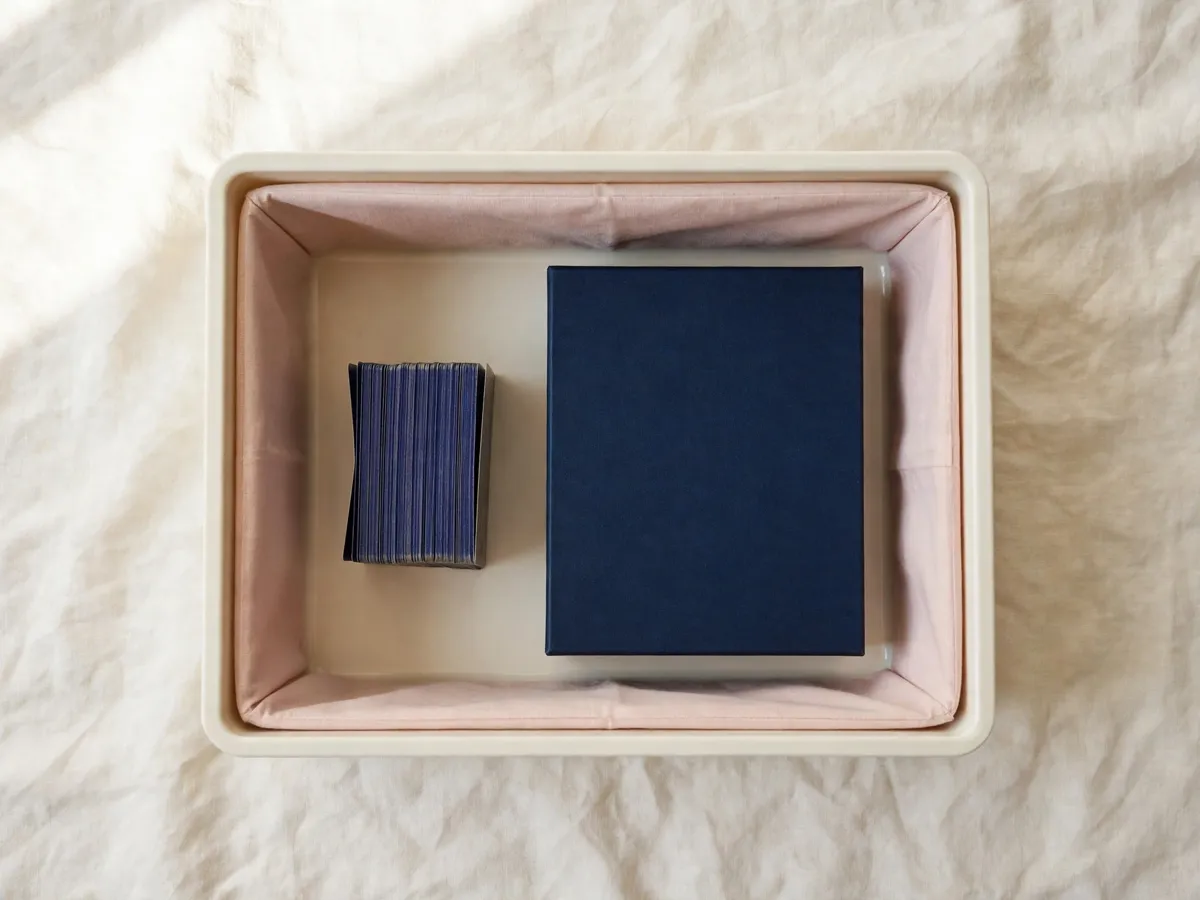
One bin under the counter, next to the table, holds the games that end at the table: the card deck, the small board game, the domino set. The bin stays off the floor, so the table clears in one lift, and the game pieces go back in the box first, the box into the bin. The bin is the last stop of the game, not a second playing surface.
Ages 4-6 · 10 minutes · the kitchen · one under-counter bin, the game boxes.
23. A tall lidded box in the closet
The box for the twice-a-year sets: the big board game, the building set with a thousand pieces, the party box. It is not a daily box. Two labels, one on the lid and one on the shelf, keep it going back to the same spot, and a heavy lid stays with an adult from start to finish.
Ages 7+ · 10 minutes · the closet floor · one deep box with a lid, two labels.
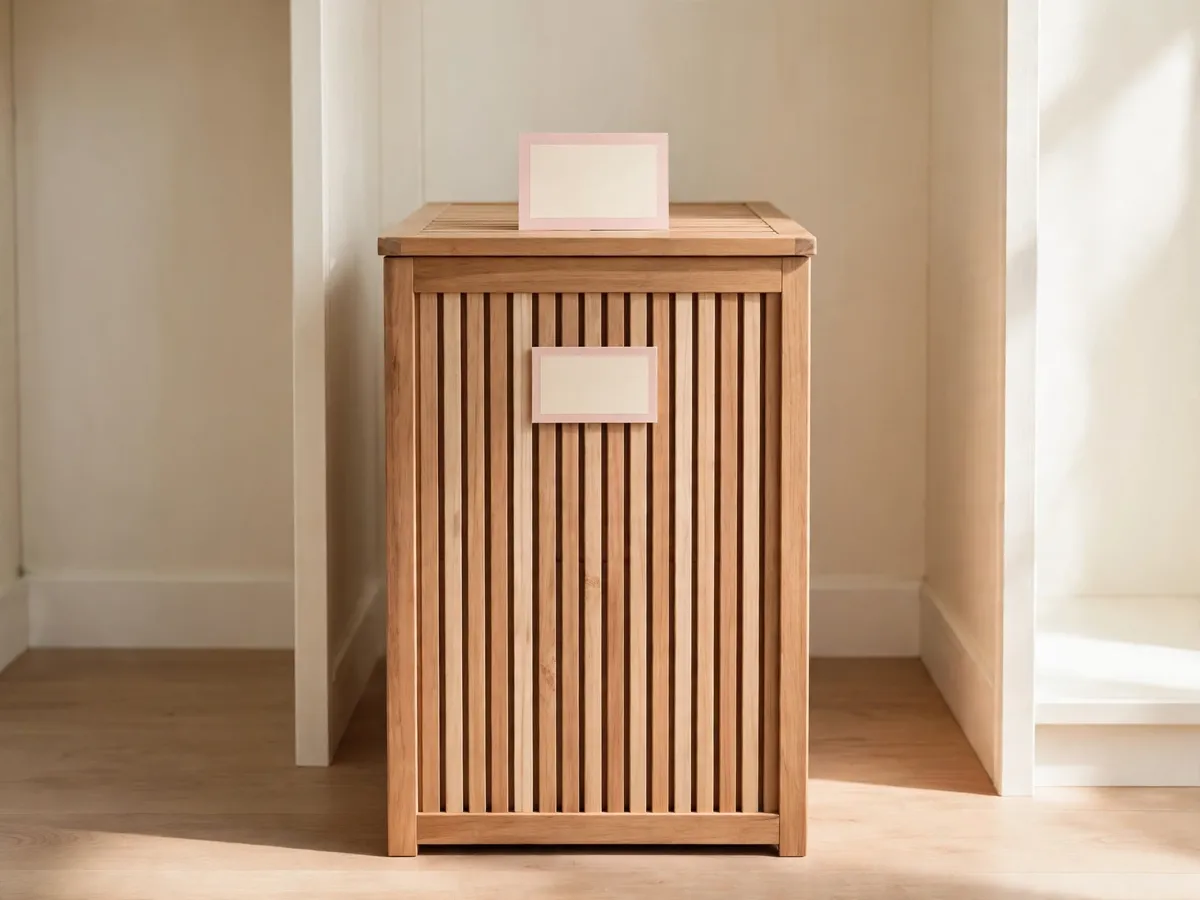
24. A closet-door bin for the seasonal
A bin on the closet door, high, for the toys that live with the season: the water-play set in summer, the snowman pieces in winter. The door bin is the one that gets swapped at the same time the wardrobe changes, so the seasonal toys do not sit in the daily room all year. An adult swaps it; the bin is heavy when it is full of water cups.
Ages 3-8 · 10 minutes · the closet · one door bin, swapped with the season.
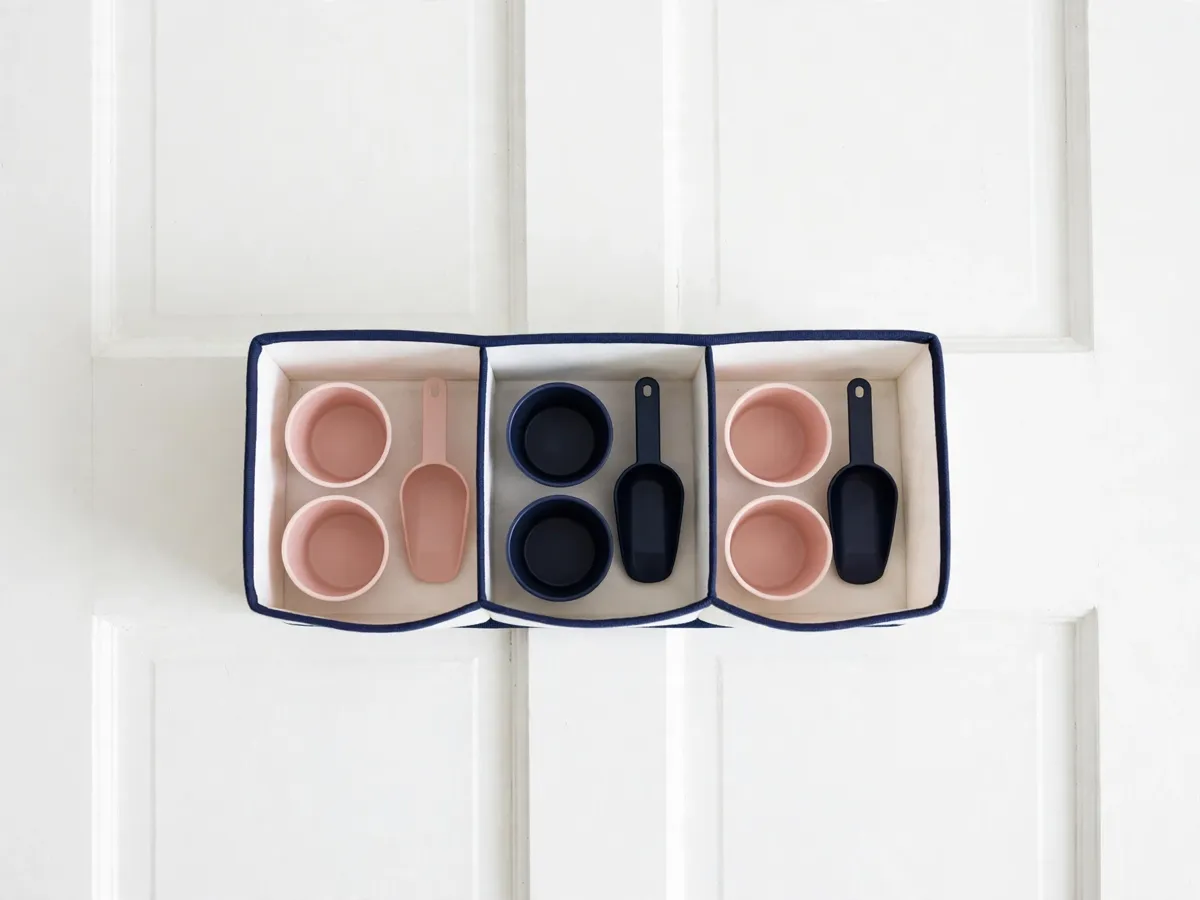
25. The rotation shelf: half in, half out
The bedroom shelf holds half the toy library, and the other half sits in one box under the bed, out of sight. The two swap on the same evening each week, the way the weekly swap shelf does in the living room, scaled to the bedroom. The room only stores half the toys, and the box is the half that is not out.
Ages 3-8 · 10 minutes · the bedroom · one shelf, one under-bed box, one swap night.
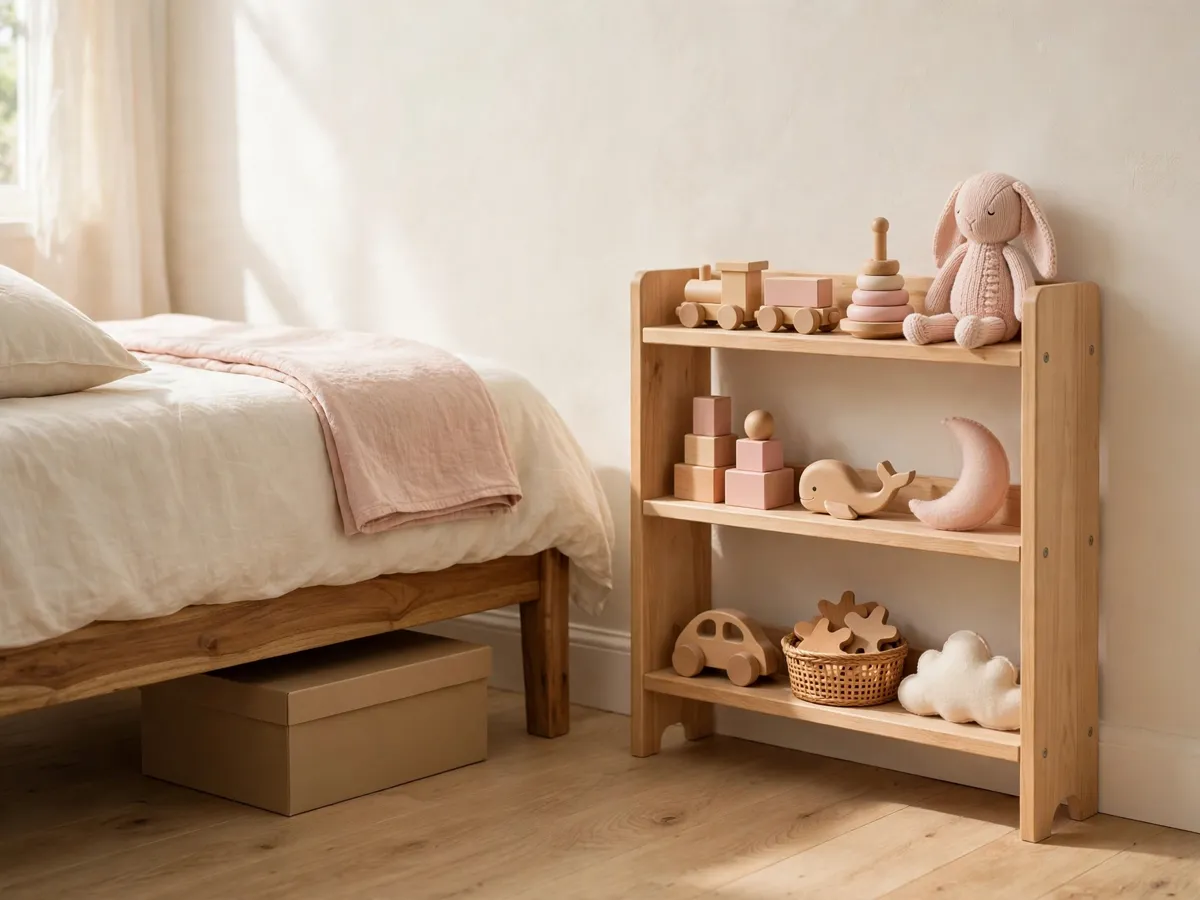
26. Clear-zipper bins on the top shelf, one label each
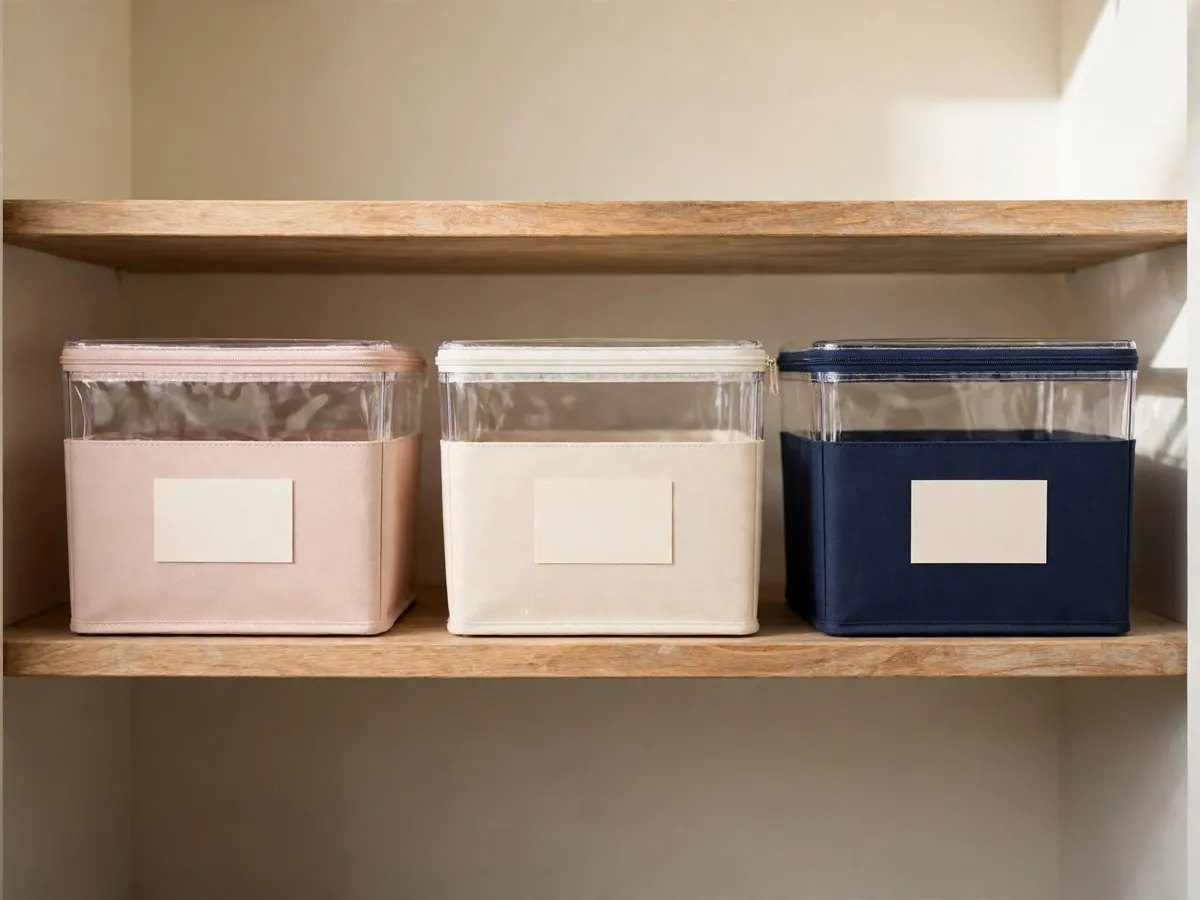
The top shelf of the closet holds the overflow in clear-zipper bins, one bin per toy type, one label card on the front. Clear reads at a glance, and the zipper keeps the small pieces inside where they belong. A bin that holds two things holds none: one type per bin, and the label says which one.
Ages 4-6 · 20 minutes · the top closet shelf · clear-zipper bins, one label card each.
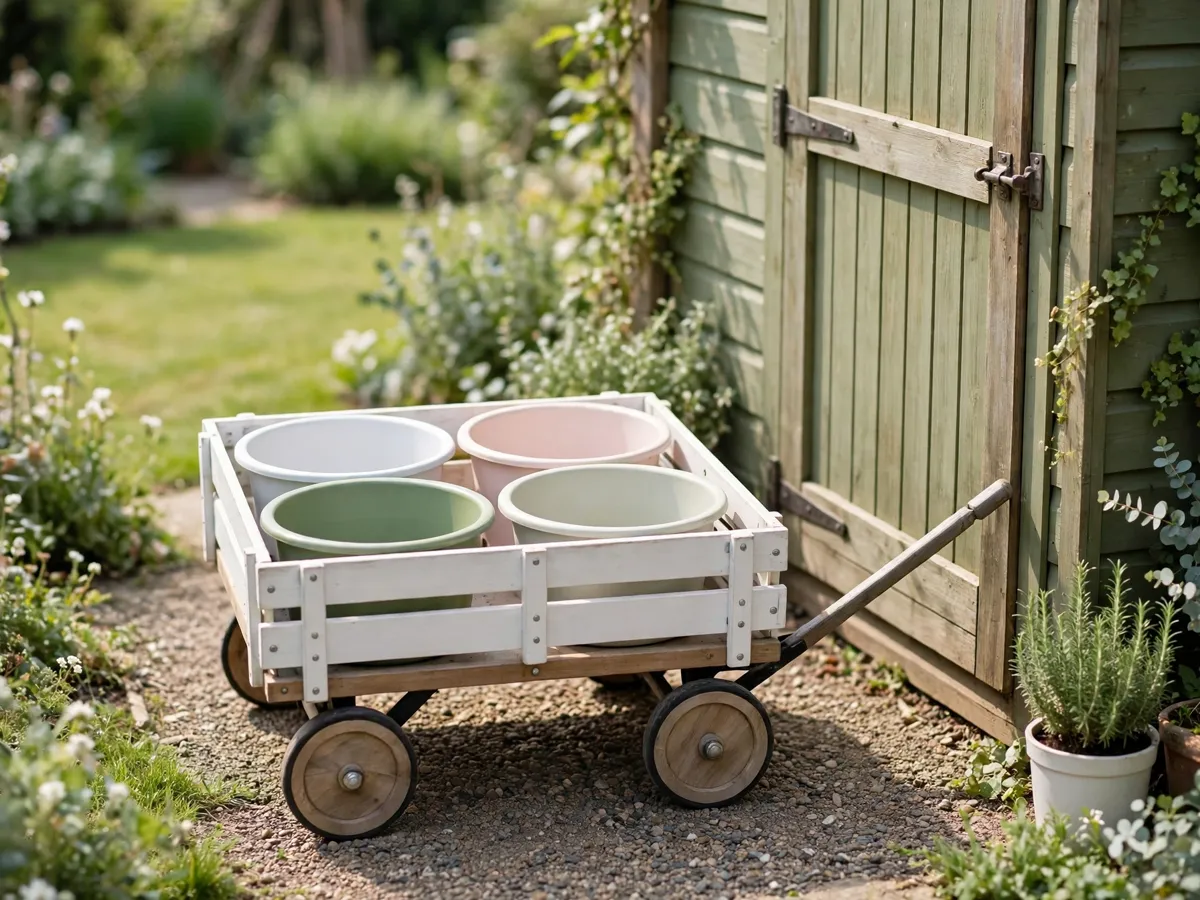
27. A wagon with four labelled tubs
The garden wagon carries four tubs, one per toy family: the balls, the water-play set, the spades, the chalk. The wagon parks at the shed door, and the tubs come out of it when the garden day is done. The labels on the tubs are the same ones on the bedroom bins, so a toy knows its home in both rooms.
Ages 3-8 · 15 minutes · the garden · one wagon, four tubs, the labels.
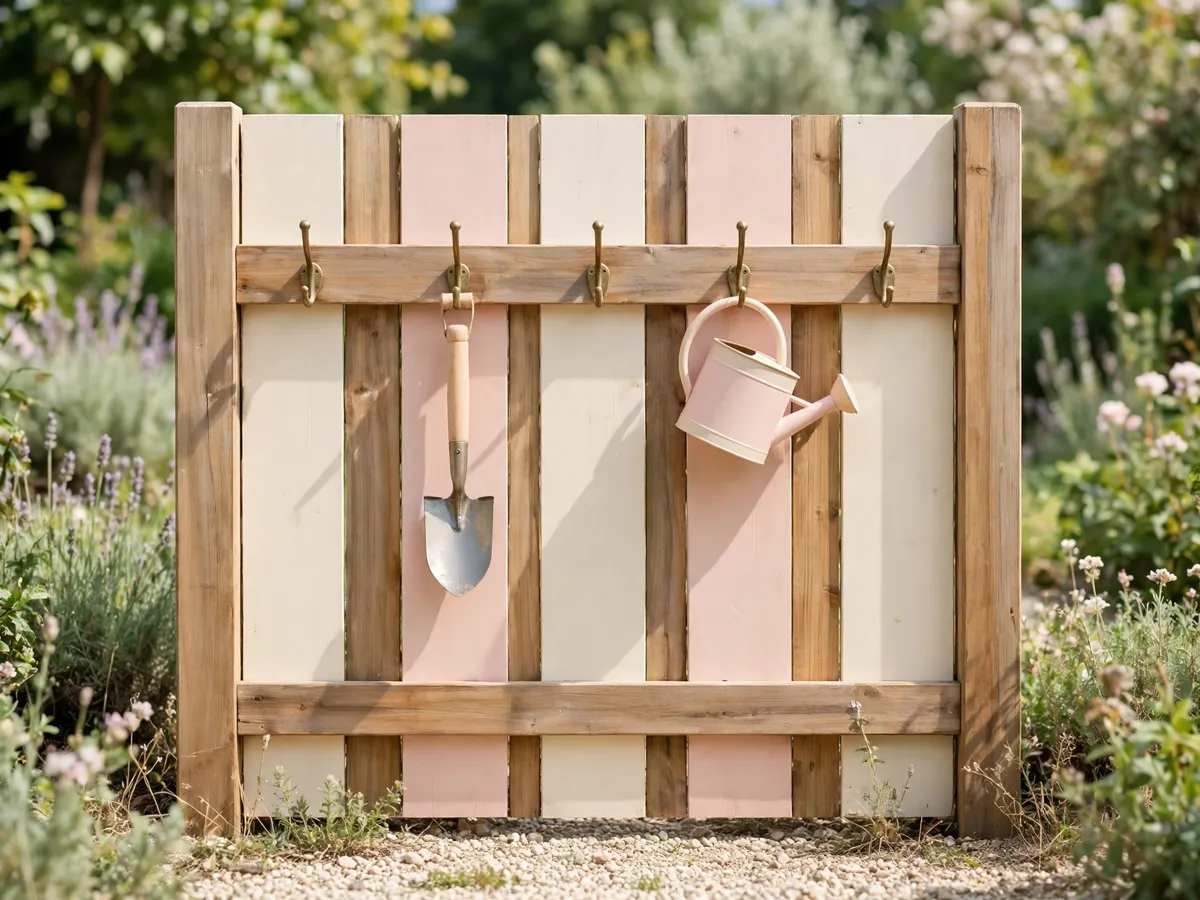
28. A hook row on the garden fence
A row of hooks on the fence at your child's shoulder height holds the gear that comes in wet: the spade, the watering can, the ball bag. The hooks are the drop point between the garden and the back door, and the wet gear dries on the fence instead of on the hallway floor. An adult fits the hooks, and the row is no higher than the top hook a child can reach.
Ages 4-6 · 15 minutes · the garden fence · one row of hooks, fitted by an adult.
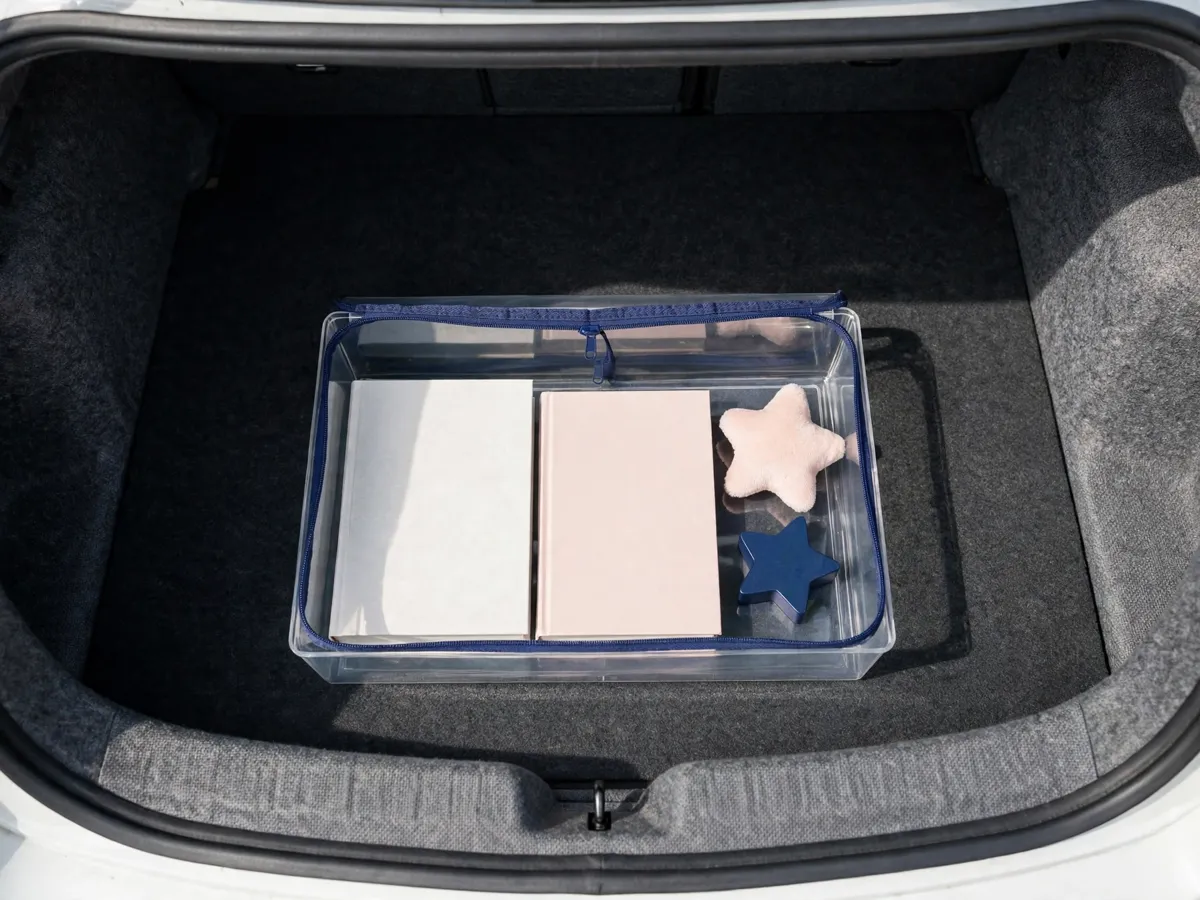
29. A trunk top-box with a label
One clear box with a zip for the car trunk, the size of the seat-back space. It holds the car caddy's contents when the car is parked: the books, the snack box, the two toys that ride. The box comes out of the trunk in one lift on the day the car is off, and the label on the lid says whose box it is, in the house of two drivers.
Ages 3-8 · 10 minutes · the car · one clear top-box with a zip, one label.
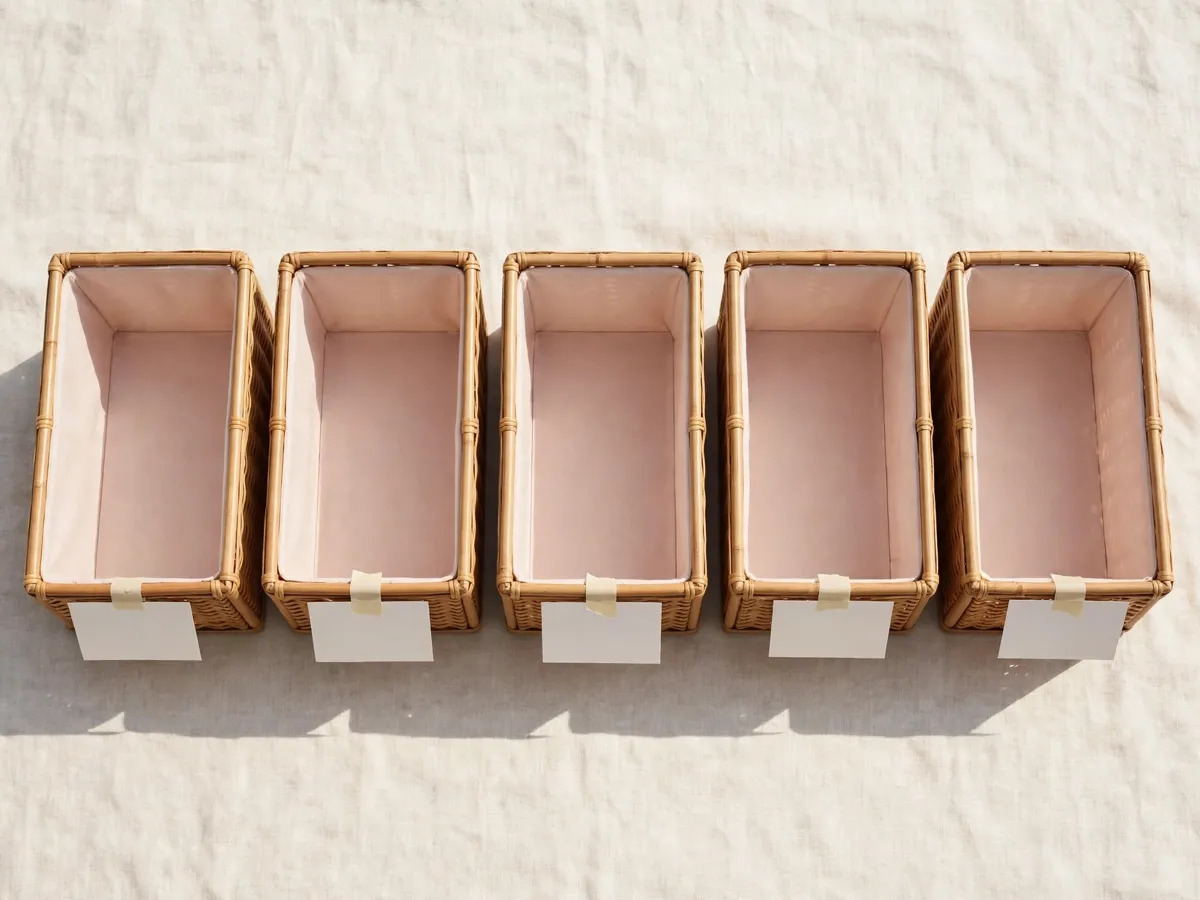
30. The label row that makes every bin read
Every bin on this list reads because it has a card on the front: a photo for the under-4s, a word for the readers, a picture-and-word for the middle. Print the label pack, cut along the dashed lines and tape one card to every bin in the house, at child height. A labelled bin is a bin that gets used, and the row of labels is the one thing that makes the thirty setups read as one system.
Ages 2-6 · 30 minutes · the whole house · the printable label pack, paper and tape.
The pass before anything goes back
Once, then again on the first of every month.
- Anchor every shelf, cubby unit and rail to the wall. An adult fits the strap or bracket and checks it once a month. A unit that wobbles when a child leans on it is not finished.
- A heavy lid stays with an adult: lift it clear, hold it, set it down flat before a child reaches in. A lid that drops lives in a cupboard a child cannot open.
- Small parts live above shoulder height, out of reach of anyone under 3. An adult lifts the tray down and sits at the table with the child.
- No standing on a drawer, a basket rim or the bed to reach a shelf. Anything above the shoulder line waits for an adult.
- Button and coin batteries come out of any toy that rattles and go into a closed cupboard, out of reach. A child never holds one.
Print the label pack: one card per bin, cut and tape
Nine labels on one page, ready in US Letter or A4. Cut along the dashed lines and tape each card at child height, one per bin.
Download the toy bin labels (US Letter) · A4 · 1 page
An adult trims the prints and cuts the shapes.
Save this for the room that fills up first
Pin the setup that matches your room and your child's age band, then come back on the day the tape measure is out. The Kids Meals & Family Spaces collection holds the rotation checklist and the small-room plans that share these measurements.