 KidNestClub
Kids Room & Toy Storage
Playroom Storage: 7 Zones That Keep the Floor Clear, Ages 2-10
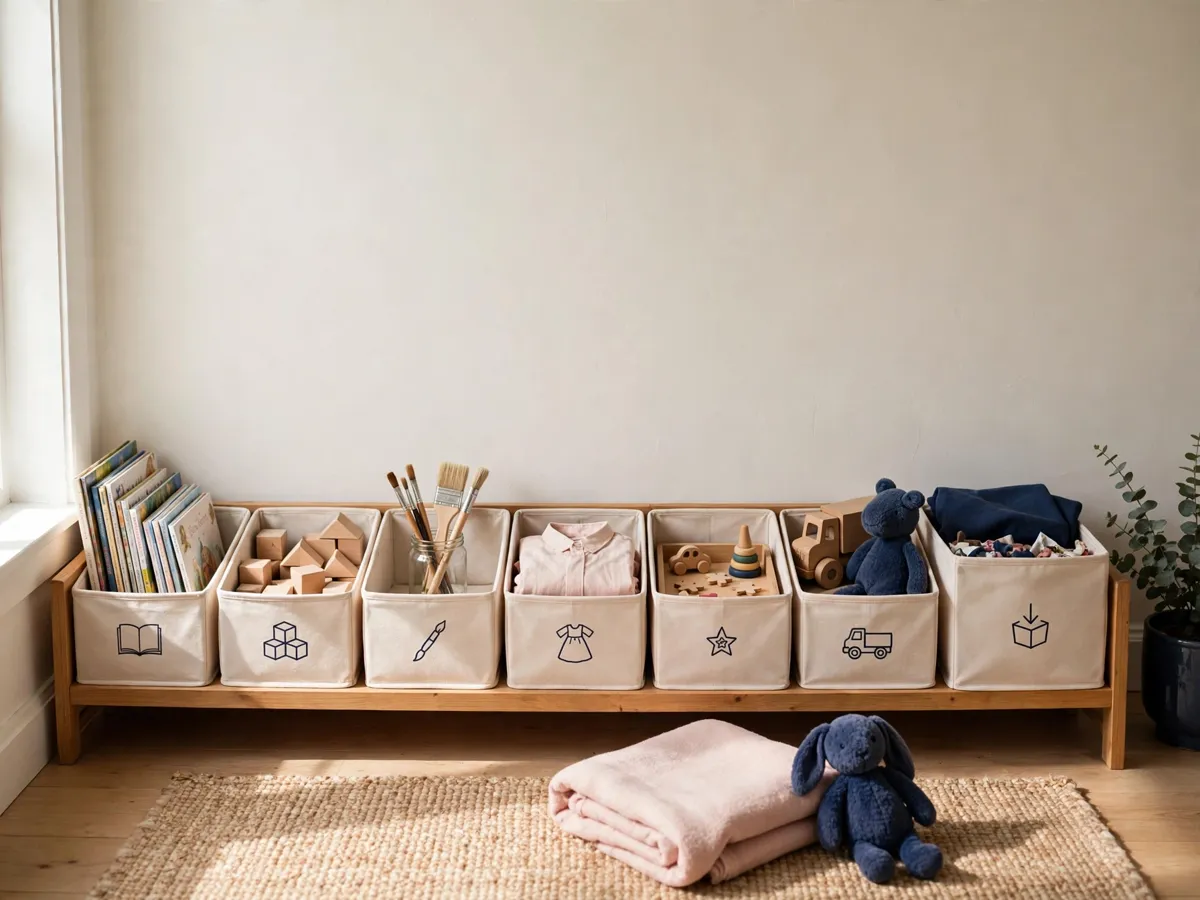
Seven zones, one box each, for Ages 2-10: books, blocks, art, dress-up, small toys, big toys and the overflow bin. Every box is one the family already owns. Start with one zone, not all seven.
By KidNestClub · Updated 12 November 2026
30-40 minutes for all seven · Ages 2-10 · Seven boxes, a marker and tape for the labels.
Why zones instead of one big bin
A playroom fills up because everything has one home and nothing has its own. One bin holds blocks, a half-built puzzle and a plastic dinosaur, so the dinosaur gets tipped out every time anyone wants a brick. A zone names one job per box: blocks in the block box, art supplies in the art box.
Seven is the ceiling, not the target. For a smaller first step, the toy rotation checklist trims what stays out before you label a single box.
1. The book zone: one low box, covers out
You need: one shallow box or basket, rim below your child's shoulder. Time: 5 minutes · Ages 2-6 · the corner where you already read together.
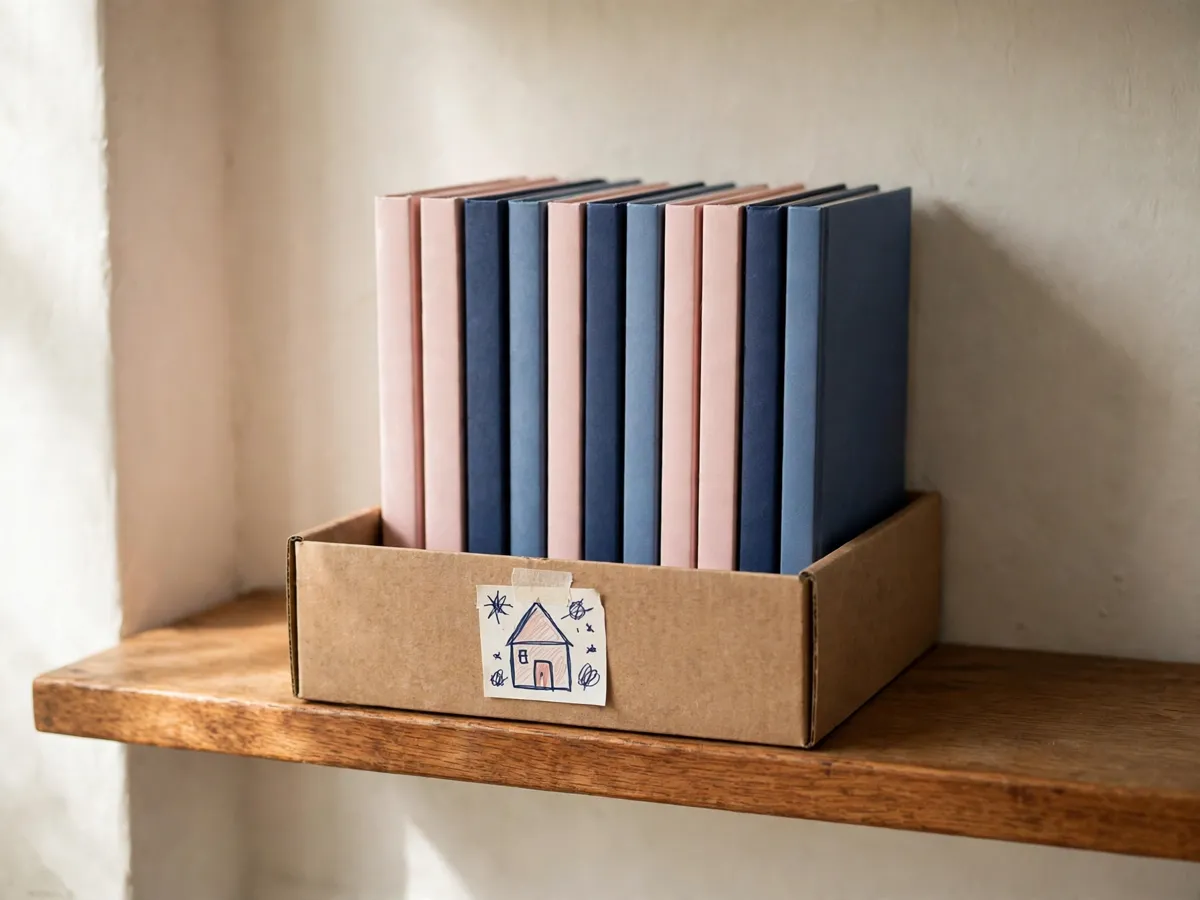
Five to eight books, covers facing out. A row of spines shows nothing at floor level, and a child picks from what is visible. Swap the row every couple of weeks. Picture books here, board games somewhere else.
2. The block zone: the biggest box, half full
You need: one wide, lid-free box, the rim below your child's shoulder. Time: 5 minutes · Ages 2-6 · the flattest stretch of floor.
Blocks, bricks, train track, the long pieces that never fit anywhere else. Keep the box half full: one packed to the rim spills its load the moment a small hand reaches in. Big toys belong in the big-toy zone. Stand the box against the wall the toys already drift toward, so a brick drops in on the way past.
3. The art zone: one lidded box at the table
You need: one box with a lid that lifts off in one hand, plus a tray for loose pieces. Time: 10 minutes · Ages 4-6 · the kitchen table or a low shelf.
Paper, crayons, glue sticks, tape and the blunt-tip scissors that live here. Paper stands upright so one sheet comes out without unfolding the stack. Beads and buttons sit above shoulder height, out of reach of anyone under 3. An adult lifts the tray down when the table is set, and the box goes back on its shelf the same day.
4. The dress-up zone: one hook rail, nothing heavy
You need: one rail with four hooks, fitted by an adult into a stud. Time: 20 minutes · Ages 4-6 · the wall behind the door.
Capes, a backpack, a sun hat, one tote of costume pieces. Hooks go at your child's shoulder height, and nothing hangs where a child would stand on the bed to reach it. Follow the wall-anchor instructions that come with the unit, and keep the load light: fabric and soft things only, nothing that is not costume.
5. The small-toy zone: trays up high, an adult brings them down
You need: two shallow trays with a raised edge, one shelf above shoulder height. Time: 10 minutes · Ages 7+ · a bedroom or hall shelf.
Figures, marbles, beads, coins, dice: the pieces too small for a floor box. The tray edge keeps them from rolling, and the shelf keeps them out of reach of anyone under 3. A paper-towel tube is the quick test: a piece that drops through it goes on the tray, not on the rug. Your child asks, an adult lifts the tray down, and you work at the table together.
6. The big-toy zone: floor level, no climbing
You need: one open floor space, plus a laundry basket or low box for the wheels. Time: 5 minutes · Ages 2-10 · the corner furthest from the book zone.
The ride-on, the ball, the pushcart, the big soft things. These stay on the floor because they never fit a box and never go up high. Park them in the corner so the walking line through the room stays open. No standing on a basket rim, a bed or a chair to reach a shelf. Anything above the shoulder line waits for an adult. The rainy-day rescue list is a good companion for this corner on a long indoor day.
7. The overflow bin: one box, and it stays closed
You need: one lidded box, out of the walking line. Time: 10 minutes · Ages 2-10 · a closet or under a bed.
This is the box for the twice-a-year sets and the toys that have run their course: the party box, the big board game, the set missing a piece. A heavy lid stays with an adult: lift it clear, hold it, set it down flat before a child reaches in. Label the lid and the shelf it sits on, so the box goes back to the same spot.
How to label the boxes
Tape a photo, not a word. A photo of the contents is read at a glance, and it works before handwriting does. Put it on the front of the box, at eye level, on the side a child walks past; a label nobody can see is not a label.
The pass before anything goes back
Once, then again on the first of every month.
- Follow the wall-anchor instructions that come with any unit that stands on the floor, and keep heavy things low. An adult fits the anchor and checks it once a month.
- For anything with a hazard in it — scissors, heat, water, small parts — the same rule applies: an adult, close enough to act.
- Small parts live above shoulder height, out of reach of anyone under 3. An adult lifts the tray down and sits at the table with the child.
- A heavy lid stays with an adult: lift it clear, hold it, set it down flat before a child reaches in. A lid that drops lives in a cupboard a child cannot open.
- Button and coin batteries come out of any toy that rattles and go into a closed cupboard, out of reach. A child never holds one.
Your first week
Day 1 — two zones. Books and blocks first.
Days 2 to 4 — five minutes at the same time. Before the bedtime story works. Put back only what belongs to a zone you have already built.
The weekend — the remaining zones, one a night. Art and dress-up, then the two shelf zones. Ages 4-6 and Ages 7+ can carry the five minutes as a row on a chore chart by age, with the box ticked by the child.
The floor fills up again
Everything lands in the same box: that zone has two jobs. Split it, and keep the box your child already uses.
The boxes are full by Thursday: fewer toys in them, not a second box. Take half out and store it.
Nothing goes back at all: do it together for five nights, you holding the box and your child carrying the pieces, then hand over the last step. Ages 2-3 need that hand-over for longer.
Save this for the next time the floor disappears
Pin this page, then come back on the day the boxes are out. The Kids Meals & Family Spaces collection holds the rotation checklist and the small-room plans that share these zones.